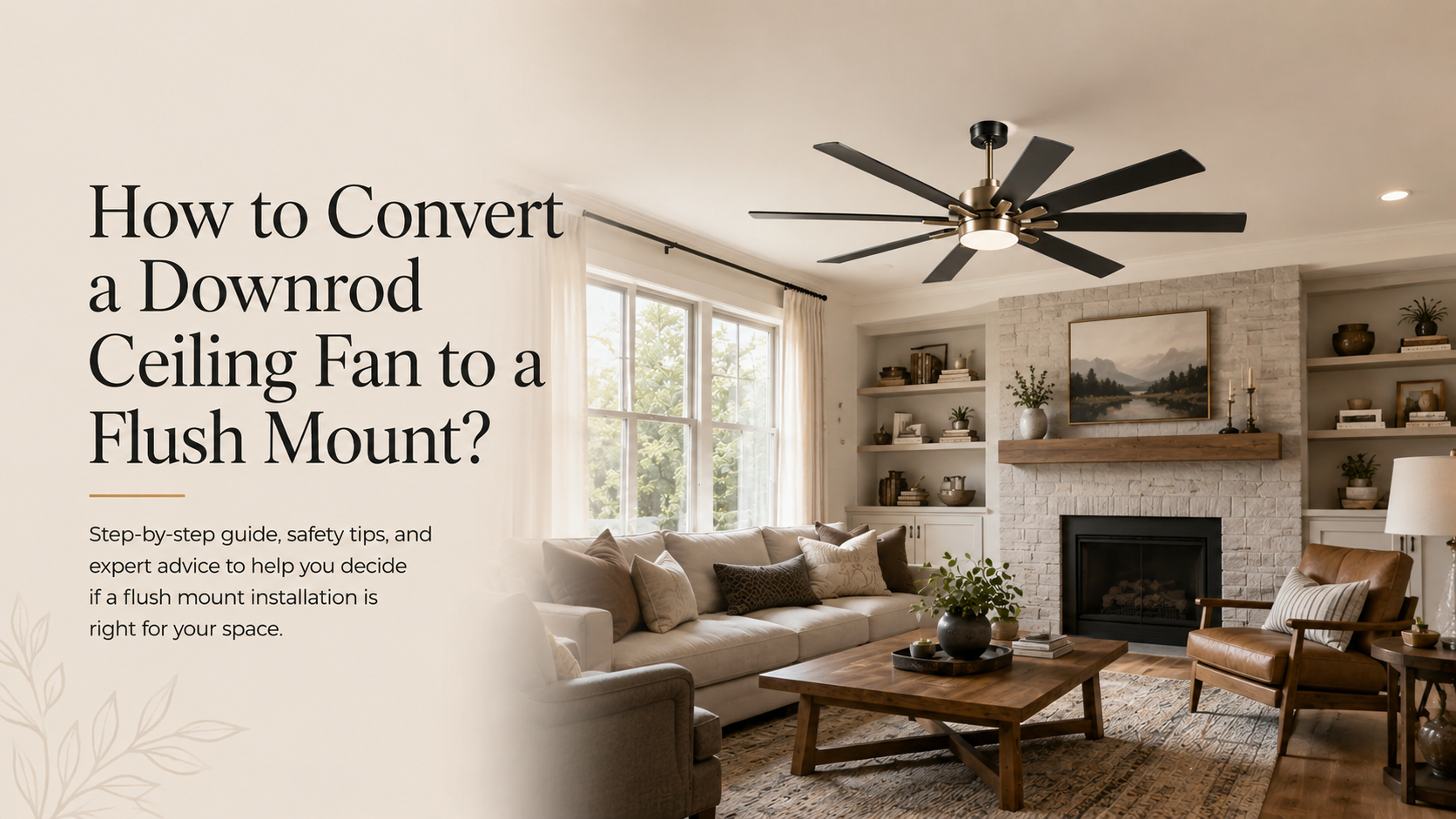


A windmill ceiling fan is usually the better choice when you want a bold farmhouse, rustic, lodge, or industrial look. It often has more blades, a wider visual shape, and a strong design presence. A regular ceiling fan is usually the better choice when you want a cleaner look, easier style matching, and more design flexibility.
For comfort, the right choice is not only about looks. You should also look at the room size, ceiling height, blade span, motor type, airflow rating, control options, and where the fan will be installed. Ceiling fans help people feel cooler by moving air across the skin. They do not actually lower the room temperature, so the best fan is the one that moves air well where people sit, eat, work, or relax.
Parrot Uncle is a U.S.-based home brand best known for ceiling fans, and lighting solutions that improve comfort and elevate the look of everyday spaces.In simple terms, choose a windmill ceiling fan if the fan will be part of the room design. Choose a regular ceiling fan if you want the fan to blend in and do its job without becoming a major focal point.

What Sets Them Apart
A windmill ceiling fan gets its name from the look of an old windmill. Instead of the common three, four, or five blade layout, many windmill style fans use a round, multi blade design. The blades are often slimmer and arranged in a wide pattern. This gives the fan a full, decorative shape that works well in farmhouse homes, rustic dining rooms, vaulted living rooms, barns, barndominiums, covered patios, and large open spaces.
A regular ceiling fan is a broader category. It can be modern, traditional, coastal, industrial, minimal, or transitional. It may have three blades, five blades, or more. The key difference is that a regular fan is not trying to copy the windmill shape. It is usually simpler in the ceiling line and easier to match with different types of furniture and lighting.
The biggest mistake buyers make is thinking a windmill ceiling fan is always more powerful just because it has more blades. That is not always true. Airflow depends on the full fan design, including blade span, blade pitch, motor strength, speed settings, and the CFM rating. CFM means cubic feet per minute, which is the amount of air a fan moves. Fan efficiency is often measured as CFM per watt, which shows how much airflow the fan delivers for the energy it uses.
The Feel of the Air
The main job of any ceiling fan is comfort. In summer, most ceiling fans should run counterclockwise so you feel a direct breeze underneath the fan. In winter, many reversible fans can run clockwise at low speed to help move warm air down from the ceiling area. This is helpful in rooms with high ceilings, open stairways, and large living areas.
A windmill ceiling fan often feels different from a regular fan because of how the blade layout spreads the air. Many windmill fans are built for wide, gentle circulation instead of a narrow, sharp breeze. That can be a good fit for dining rooms, great rooms, and bedrooms where you want comfort without feeling like the fan is blasting directly at you.
A regular ceiling fan can feel more direct, especially if it has fewer blades, a strong motor, and a higher speed setting. That can be useful in a home office, kitchen, garage, or patio seating area where you want a clear breeze in one zone.
Neither style is automatically better. The better fan is the one that matches how the room is used.
Best Rooms for Each Fan
A windmill ceiling fan works best in rooms where the fan can be seen and appreciated. It looks natural in spaces with wood beams, shiplap, black metal accents, rustic furniture, leather seating, stone fireplaces, high ceilings, and warm lighting. It can also soften industrial rooms by adding a handcrafted look.
A regular ceiling fan works best in rooms where the design needs to stay simple. It is a safe choice for bedrooms, offices, apartments, modern living rooms, kitchens, guest rooms, and smaller spaces. If the room already has a strong chandelier, bold wallpaper, large artwork, or heavy furniture, a regular fan may keep the ceiling from looking too busy.
For rooms under 400 square feet, many standard size fans can work well when matched to the correct blade span. Official fan sizing guidance commonly places rooms from 225 to 400 square feet in the 50 to 54 inch fan range, while smaller rooms need smaller fans. Fans should also be mounted at least 7 feet above the floor and at least 18 inches from walls, with 8 to 9 feet above the floor preferred when the ceiling height allows.
Side by Side Comparison
| Feature | Windmill Ceiling Fan | Regular Ceiling Fan |
|---|---|---|
| Main appeal | Strong farmhouse, rustic, or industrial style | Flexible style for many rooms |
| Visual impact | High, often a focal point | Low to medium, often blends in |
| Common blade look | Multi blade, round windmill shape | Three to five blades, but many options exist |
| Best spaces | Great rooms, dining rooms, vaulted rooms, covered patios, barns | Bedrooms, offices, kitchens, living rooms, apartments |
| Airflow feel | Often broad and gentle | Can be gentle or direct depending on design |
| Design risk | Can feel too busy in small rooms | Usually easier to match |
| What to check | CFM, diameter, ceiling height, blade clearance | CFM, diameter, controls, mount type |
| Best buyer | Someone who wants style plus airflow | Someone who wants simple comfort and design flexibility |
Style Matters More Than You Think
A ceiling fan sits in the center of the room, so it affects the whole design. This is especially true in American homes with open floor plans. In a living room that connects to a kitchen and dining area, the ceiling fan may be visible from several angles. A windmill ceiling fan can help define the space, almost like a statement light fixture.
A windmill fan looks especially natural when the room has at least one of these design elements:
- Wood tones, beams, or a farmhouse table
- Black, bronze, or aged metal finishes
- A large ceiling area where the fan does not feel crowded
A regular ceiling fan is safer when the room design may change over time. If you plan to repaint, replace furniture, or move within a few years, a clean regular fan may be easier to live with. It also works well in homes where resale style matters. Not every buyer wants a bold farmhouse ceiling feature, but most buyers understand a simple, well sized ceiling fan.
That does not mean windmill fans are only for rustic homes. A black windmill fan can work in a modern industrial loft. A wood tone windmill fan can warm up a neutral great room. A bronze finish can suit a traditional dining area. The key is balance. If the fan has a bold shape, keep the nearby lighting, furniture, and ceiling decor simple.

Airflow Is Not Just Blade Count
Many shoppers look up and count blades first. That is understandable, because blades are easy to see. But blade count alone does not tell you how much air the fan will move.
A fan with more blades may look fuller and may move air in a smooth pattern. A fan with fewer blades may move air very well if the motor, blade pitch, and diameter are designed for performance. A larger fan may also run at a lower speed while still giving the room a comfortable feel.
The better way to compare fans is to look at measurable details:
- Blade span
- CFM rating
- CFM per watt
Blade span tells you how wide the fan is. CFM tells you how much air it can move. CFM per watt tells you how efficiently it moves air for the energy used. This is why two fans that look similar can perform differently.
For large spaces, do not rely on looks alone. A great room, covered patio, or open concept living area needs a fan that can handle the size of the space. A pretty fan that is too small may run all day and still leave parts of the room feeling still.
Room Size Comes First
Before choosing between a windmill ceiling fan and a regular ceiling fan, measure the room. This sounds basic, but it prevents most buying mistakes. Measure the length and width of the room, then multiply them to get the square footage.
For example, a 15 foot by 20 foot living room is 300 square feet. That space usually needs a larger fan than a small bedroom. If the room has an open layout, high ceilings, or outdoor exposure, airflow needs may be higher.
Ceiling height also matters. A fan that hangs too low can feel unsafe and look awkward. A fan that sits too high may not move enough air where people actually sit. For many rooms, the best fan height is around 8 to 9 feet above the floor when the ceiling allows it. In a room with a high or vaulted ceiling, a downrod helps bring the fan closer to the ideal height.
Windmill fans are often larger in visual scale, so they need breathing room. In a small bedroom with a low ceiling, a windmill fan may feel heavy even if the blade span technically fits. In a large room with a tall ceiling, the same fan can look balanced and intentional.
Ceiling Height and Mounting
Mounting is not the exciting part of buying a ceiling fan, but it is one of the most important parts. A fan must be installed securely, centered properly, and placed with enough clearance around the blades.
For standard ceilings, a regular downrod mount often works well. For low ceilings, a flush mount or hugger fan may be better. For vaulted ceilings, you need to check slope compatibility and downrod length. Large fans may also need extra attention to support and balance.
Windmill ceiling fans tend to draw the eye, so poor placement is more obvious. If a windmill fan is too close to a wall, too low over a bed, or not centered over a dining table, the whole room can look off. A regular fan is more forgiving, but it still needs proper clearance.
For dining rooms, place the fan based on both the table and the ceiling box. If the ceiling box is not centered over the table, consider whether the table can move. Do not hang a fan where people will feel crowded when standing up or walking around the table.
Noise and Daily Use
Noise matters in real life. A fan may look great online, but if it hums, clicks, or wobbles, it becomes annoying fast. This is especially true in bedrooms, offices, nurseries, and dining rooms.
A quiet fan depends on the motor, blade balance, installation, and speed setting. DC motor ceiling fans are popular because they are often efficient and quiet, though the full experience still depends on the fan design and installation quality. A remote control is also useful because it lets you adjust speed, lighting, and direction without reaching for chains or wall switches.
For windmill ceiling fans, check reviews and specifications for motor type and speed control. Because many windmill fans have a larger and more detailed blade layout, balance is important. For regular fans, check whether the fan has the control style you prefer. Some homeowners like a wall control. Others prefer a remote. Some want both.
A good ceiling fan should be easy to use every day. If changing speeds or light settings is annoying, the fan may not be used the way it should be.
Energy Use in Plain English
A ceiling fan can help you feel more comfortable without relying only on the air conditioner. The important point is that a fan cools people, not the room itself. If no one is in the room, leaving the fan on usually wastes energy.
During hot weather, a fan can make the room feel more comfortable by creating a breeze. That may let you use the air conditioner less aggressively. During cool weather, a reversible fan at low speed can help move warm air that collects near the ceiling. This is most useful in rooms with taller ceilings.
When comparing windmill and regular fans, do not assume one type is always more efficient. Look at the motor power, CFM, and CFM per watt. A large fan with an efficient motor can move a lot of air without using a large amount of electricity. A smaller fan that has to run on high speed all the time may not feel as comfortable in a big room.
When a Windmill Fan Wins
A windmill ceiling fan is the stronger choice when the room needs both airflow and character. It can make a plain space feel more finished. It can also connect the ceiling to the rest of the design, especially when the room uses wood, metal, leather, brick, stone, or warm neutral colors.
Windmill fans are especially useful in open areas where a small regular fan would look undersized. In a vaulted living room, a multi blade windmill fan can fill the ceiling space without needing a chandelier. In a farmhouse dining room, it can add comfort while still supporting the room style. In a covered patio, it can make the outdoor living area feel more like a finished room, as long as the fan is rated for the location.
A windmill fan is also a good choice when you want the fan to be noticed. If the ceiling is high, the room is large, and the design has rustic or industrial elements, a windmill fan can look natural rather than oversized.
When a Regular Fan Wins
A regular ceiling fan is the better choice when the room needs quiet function and simple style. It is easier to match with modern furniture, clean lines, low ceilings, and small rooms. It is also easier to use in rooms where the fan should not compete with lighting or artwork.
Regular fans are also better for homeowners who want many options. You can find regular ceiling fans with lights, without lights, with remote controls, with flush mounts, with downrods, with smart features, and in many finishes. That makes them easy to fit into different rooms across the same home.
If you are replacing an old fan and want a simple upgrade, a regular fan may be the fastest choice. You can focus on the correct size, airflow, motor, and finish without changing the whole room style.
Common Buying Mistakes
Choosing by looks only
A beautiful fan can still be wrong for the room. Before buying, check the blade span, airflow rating, mounting type, ceiling height, and room size. This matters even more with windmill fans because they have a stronger visual presence.
Ignoring the ceiling height
A fan that hangs too low can feel uncomfortable and may not meet safe clearance needs. A fan that sits too high may not deliver enough breeze. If the ceiling is tall, a downrod can help place the fan where it works better.
Leaving the fan on all day
A ceiling fan should run when people are in the room. Since fans make people feel cooler rather than lowering the room temperature, turning them off in empty rooms saves energy.
How to Choose in Three Steps
First, decide whether the fan should stand out or blend in. If the fan is part of the design story, a windmill ceiling fan may be right. If the fan is mainly for comfort, a regular ceiling fan may be better.
Second, measure the room and ceiling height. Do not guess. A room that feels medium sized may actually be over 300 square feet, especially in open concept homes. Use the measurements to narrow your fan size.
Third, compare performance details. Look at CFM, speed settings, motor type, lighting, remote control, reversible direction, and location rating. For patios, porches, and outdoor areas, make sure the fan is suitable for the installation area.
Two Picks From Parrot Uncle
60 Inch Oretha Windmill DC Ceiling Fan With LED Lighting
The 60 Inch Oretha Windmill DC Ceiling Fan is a strong fit for homeowners who want the windmill look without going too large. It has an 8 blade windmill style design, walnut finish blades, an LED light, a remote control, six fan speeds, and reverse blade direction. The product page lists it for great rooms over 350 square feet, with a maximum airflow rating of 6500 CFM and dry location use.
This fan makes sense for a farmhouse living room, rustic dining room, large bedroom, or open family room where the ceiling fan should add style. The oil rubbed bronze finish option gives it a warm, classic look. The integrated light also helps when you want one ceiling fixture to handle both air movement and general lighting.
Choose this model if you want a fan that feels decorative, warm, and traditional without losing everyday function. It is best for indoor spaces where a windmill shape supports the rest of the room design.

60 Inch DC Motor Modern Downrod Mount Ceiling Fan
The 60 Inch DC Motor 8 Blades Modern Downrod Mount Ceiling Fan is a better fit for shoppers who want strong performance in a cleaner modern style. Its product page lists a 60 inch blade span, six speeds, remote control, DC motor, downrod mounting, LED module, dimmable light, three color temperature settings, 14 degree blade pitch, and a maximum airflow rating of 8000 CFM. It is also listed for great rooms over 350 square feet and for indoor or covered patio locations.
This fan is a practical choice for a modern living room, home office, large bedroom, covered patio, or open concept space. It does not have the classic windmill outline, so it feels more flexible. The 8 blade design still gives it a full look, but the styling is cleaner and easier to pair with modern furniture.
Choose this model if you want a large ceiling fan with strong airflow numbers, remote control convenience, and a more streamlined appearance.

Which One Should You Pick
If your room has a farmhouse table, wood beams, a stone fireplace, barn doors, bronze accents, or a vaulted ceiling, a windmill ceiling fan can look right at home. It adds texture and makes the ceiling feel designed. It is also a good match for large rooms where a small fan would look lost.
If your room is modern, simple, small, or already visually busy, a regular ceiling fan is often the better call. It keeps the ceiling clean and gives you more freedom with furniture, rugs, lighting, and wall decor.
For many American homes, the choice comes down to one question: do you want the fan to be a design feature or a quiet helper?
If you want a design feature, go with a windmill ceiling fan.
If you want a quiet helper, go with a regular ceiling fan.
If you want both, focus on the middle ground: a large fan with strong airflow, a finish that matches the room, and controls that make it easy to use every day.
Final Take
A windmill ceiling fan and a regular ceiling fan can both be good choices. The better option depends on the room, not just the fan. A windmill ceiling fan brings style, scale, and a rustic or industrial mood. A regular ceiling fan brings flexibility, simplicity, and broad design appeal.
For large rooms, high ceilings, and farmhouse style spaces, a windmill fan can be the better match. For bedrooms, offices, modern homes, and smaller rooms, a regular fan is often the smarter choice.
Before buying, measure the space, check the ceiling height, review the airflow rating, and think about how the room is used every day. When the size, style, and airflow all line up, the fan will feel like it belongs there from the first day.