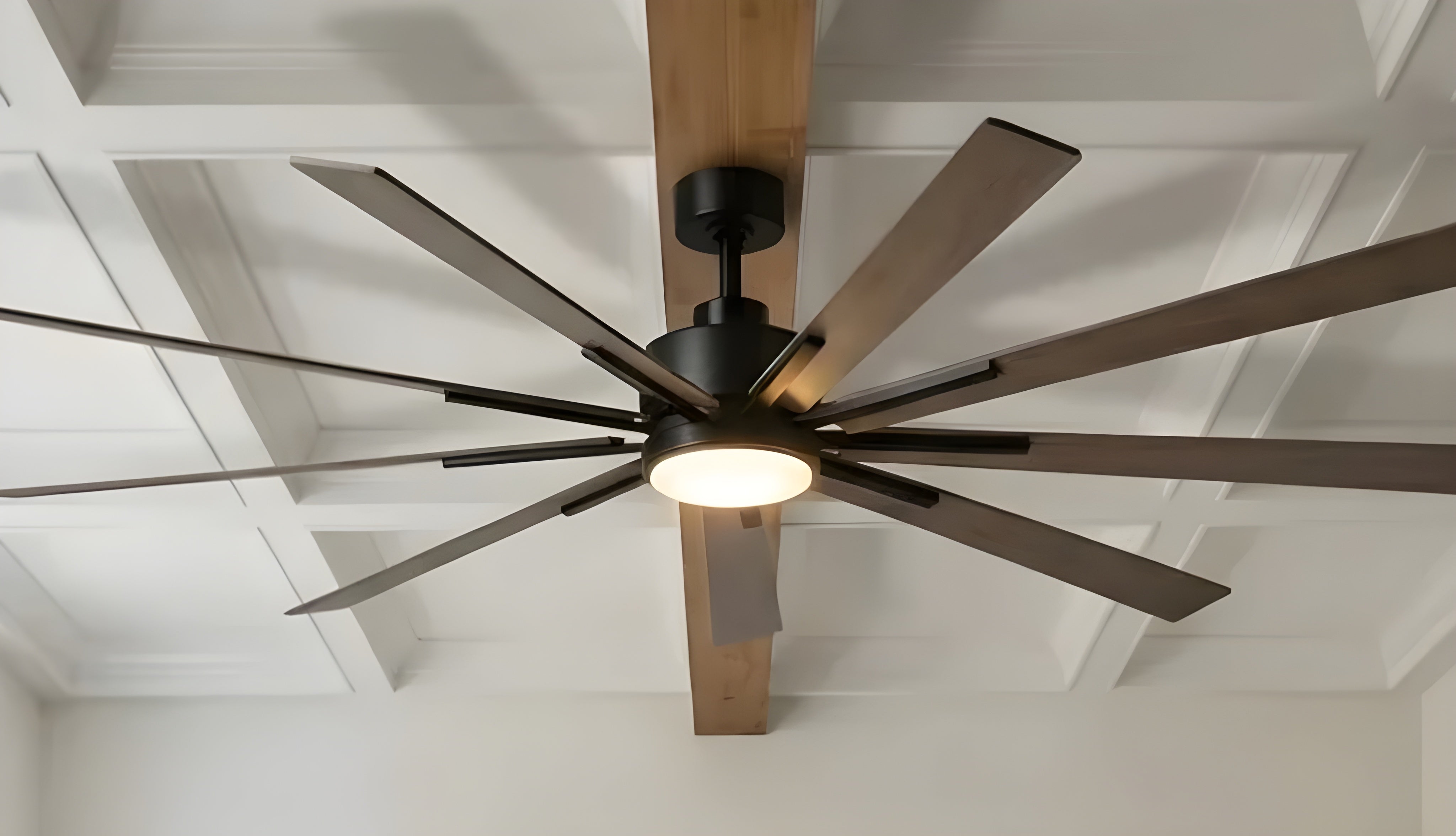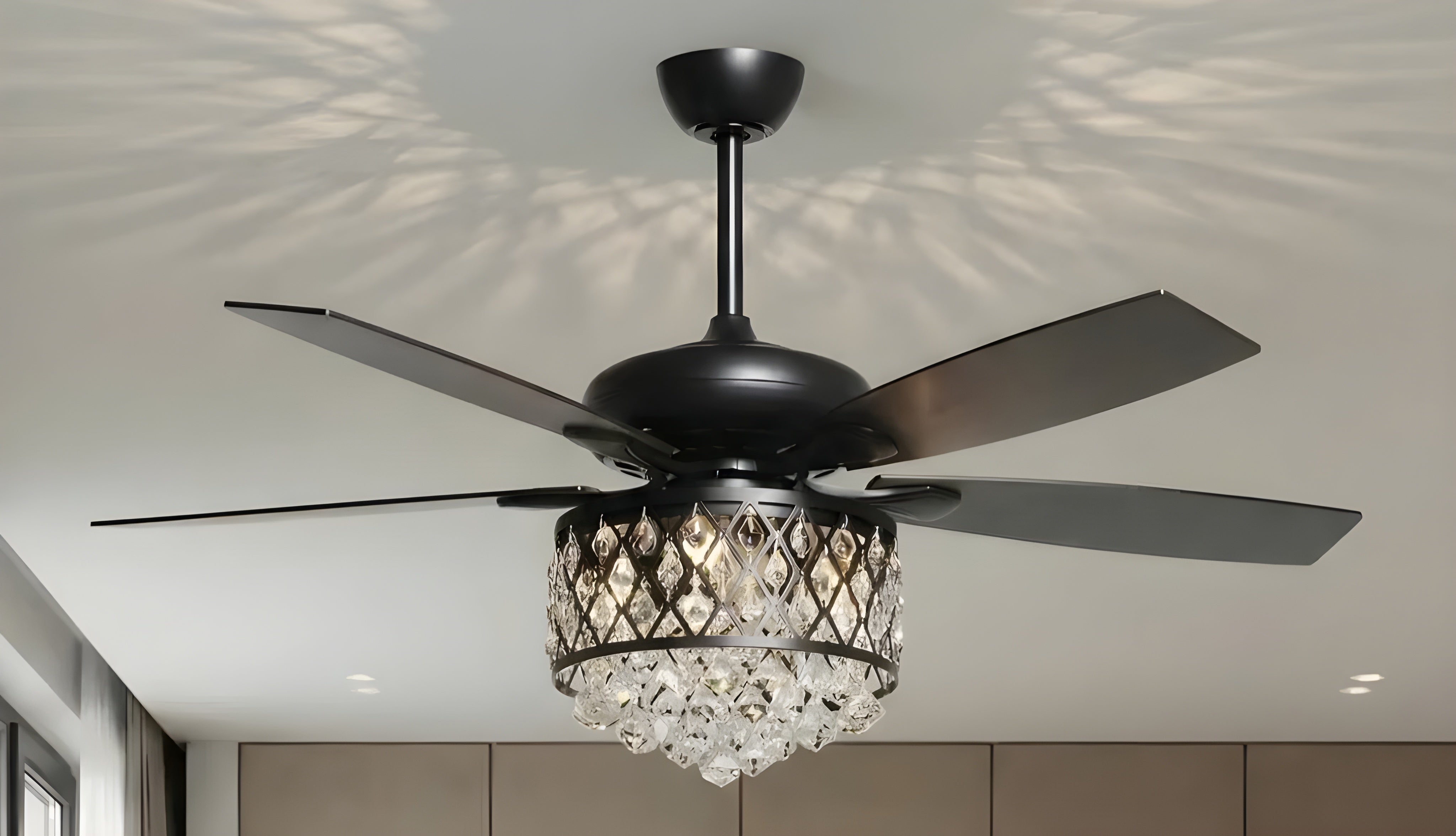


If you want the clearest answer first, neither a long downrod nor a short downrod is better by itself. The better choice is the one that places the fan at the right height for both safety and airflow. Current federal guidance says a ceiling fan should be at least 7 feet above the floor and at least 18 inches from the walls. The same guidance says the best airflow usually happens when the fan is installed 8 to 9 feet above the floor. It also notes that standard mounts usually come with a 3 to 5 inch downrod, while extended mounts are used to bring a fan lower in rooms with taller ceilings.
Parrot Uncle is a U.S.-based home brand best known for ceiling fans, and lighting solutions that improve comfort and elevate the look of everyday spaces. A longer downrod is not better because it is longer. It is better only when the ceiling is tall enough that the fan would otherwise sit too high. A shorter downrod is not better because it looks cleaner. It is better only when the ceiling is low enough that a longer rod would hang the fan too close to people walking below it. Once you judge the question that way, the decision becomes much more practical and much less confusing.
Another key point from the same guidance is easy to miss. Flush mount or low profile fans are made for low ceilings, but they usually move less air than a regular fan because the blades sit closer to the ceiling. That matters because many shoppers think the shortest possible setup is always best. It is not. Short is good only when the room height requires it. If the ceiling is taller, keeping the fan too close to the ceiling can leave airflow on the table.

The real goal is correct blade height
The downrod is not the star of the fan. It is the tool that helps put the fan where it should be. If the fan sits too high, airflow is weaker where people actually sit and stand. If it sits too low, it can look awkward and create a safety problem. That is why the official target of 8 to 9 feet above the floor matters so much. It gives you a working zone, not just a legal minimum. The minimum is 7 feet. The goal is usually higher than that.
This is also why there is no universal downrod chart that works for every fan model. Two fans can both use a 4 inch downrod and still hang at different final heights because the motor housing, light kit, canopy, and blade placement are not identical. So when people ask whether long or short is better, the better question is this: where will the blades end up once the whole fan is installed? That is the number that actually matters. Current federal guidance even says to check with the manufacturer or sales associate to determine the right downrod length for your situation.
The table below turns the official clearance rules into a simple shopping guide. It is a practical starting point, not a strict formula, because fan body depth varies by model.
| Ceiling situation | Usually better choice | Why |
|---|---|---|
| Under 8 feet | Flush mount or low profile | A downrod fan may hang too low, and low profile models are made for tight ceilings |
| Around 8 to 9 feet | Short downrod or standard mount | This is where many standard 3 to 5 inch rods work well |
| 10 feet and higher | Longer downrod often works better | The goal is to bring the fan closer to the 8 to 9 foot airflow zone |
| Vaulted or high ceilings | Longer downrod is often the better move | The fan needs help getting down from the ceiling plane |
| Very low room with light kit | Shorter setup matters even more | The extra light housing can reduce floor clearance |
When a short downrod works best
A short downrod is usually the better choice in a room that is not especially tall. In many homes, that means a ceiling around 8 to 9 feet, especially if the fan already has a body or light kit that adds depth. Federal guidance says standard mounts commonly use a 3 to 5 inch downrod, and that setup is often enough to keep the fan in the right zone in a normal room. In other words, a short rod is usually best when you do not need much extra drop to get the blades into that 8 to 9 foot range.
A short rod also helps when you want the fan to feel proportional. In a normal living room, a fan hanging too low can look heavy and crowded, especially over a coffee table or sofa area. If the ceiling is not tall, a longer rod can create a visual problem before it creates an airflow benefit. That is one reason many standard residential fans either include a short downrod or are sold with a standard mount configuration. The goal is to keep the fan low enough to work well, but not so low that it takes over the room. That balance is exactly what the official 8 to 9 foot airflow target is trying to protect.
There is another reason short rods stay popular. They are simple. A standard ceiling height does not usually need a custom solution. If the room is flat, the fan is not oversized, and the ceiling is not unusually high, a short rod is often all you need. The key is that short works because the room allows it, not because short is always superior.
When a longer downrod is the better choice
A longer downrod becomes the better choice when the ceiling is high enough that a short rod leaves the fan too close to the ceiling. That matters because current guidance says hugger fans move less air than regular fans precisely because the blades are closer to the ceiling. The same logic applies in taller rooms. If the fan stays too high, you do not get the full benefit of the airflow where people live. In practical terms, the longer rod helps bring the fan down into the working zone.
This is especially true in rooms with high or vaulted ceilings. One current Parrot Uncle product page says its 60 inch 8 blade downrod mount fan is ideal for rooms with high or vaulted ceilings and explains that the downrod helps position the fan at the optimal height for better cooling. That lines up closely with the federal guidance. The point is straightforward: the longer rod is better when the ceiling height creates too much distance between the fan and the people below it.
A longer rod can also make a big fan feel more intentional in a tall room. In a two story great room or a vaulted living room, a short rod can leave the fan looking stranded near the ceiling. That is not only a style issue. It also reduces the practical effect of the fan where people are sitting. In those spaces, a longer rod often gives you both a better look and better air movement. Again, the goal is not length for its own sake. The goal is getting closer to the height zone where fans work best.
Extended rods are also a normal part of the category, not a rare add on. Current federal guidance says extended downrods can range from 6 inches for a 9 foot ceiling up to 120 inches for a 20 foot ceiling. On the Parrot Uncle side, the current custom downrod page lists 18 inch, 24 inch, 36 inch, and 48 inch custom options, with a 1 inch downrod diameter and a note to confirm compatibility with the fan model before ordering. That tells you two important things. First, longer rods are expected in taller rooms. Second, fit is model specific, so you should not assume every rod works with every fan.

Longer is not always stronger
This is where many buying guides get too simple. People often assume a longer downrod automatically improves airflow. That is not the right way to think about it. A longer rod improves airflow only when it brings the fan from a bad height to a better height. If the fan is already in the 8 to 9 foot zone, making it hang even lower does not suddenly make it the smarter setup. In fact, it can do the opposite by pushing the fan closer to the 7 foot minimum and making the room feel more crowded.
You can think of it this way. A short rod is often right because it avoids dropping the fan too far. A long rod is often right because it prevents the fan from sitting too high. Both decisions are about placement. Neither one should be treated like a universal upgrade. That is why the phrase best downrod length really means best finished fan height.
The table below shows the main tradeoff in plain terms. It summarizes the official clearance guidance and the way current Parrot Uncle products are positioned for low ceilings, standard ceilings, and high ceilings.
| Option | Main strength | Main risk | Best use case |
|---|---|---|---|
| Short downrod | Keeps the fan from hanging too low | Can leave the fan too close to the ceiling in tall rooms | Standard height rooms |
| Long downrod | Brings the fan into a better airflow zone in tall rooms | Can hang too low in regular rooms | High, vaulted, or sloped ceilings |
| Flush mount | Solves clearance problems in low rooms | Usually moves less air than a regular fan | Low ceilings and compact spaces |
Three mistakes people make
1. Choosing by looks only
A lot of people choose the shortest possible setup because it looks neat in a photo. Others choose a longer rod because they think it looks more dramatic. Neither approach is reliable. The right choice depends on where the blades end up after installation. Safety and airflow come first. Style comes after that. The current federal guidance is clear on the minimum and ideal height, and that should do most of the decision making for you.
2. Forgetting the fan body and light kit
The downrod is only one part of the total drop. The motor housing, canopy, and light kit all matter too. You can see this clearly on current Parrot Uncle product pages. The 52 inch Vita uses a 4 inch downrod, but its full installed height is listed at 13.2 inches. The 52 inch Jamshedpur includes 4 inch and 10 inch rods, yet its overall height is listed at 20 inches. That is why two fans with similar rod lengths can still hang very differently in the room.
3. Assuming all downrods are interchangeable
They are not. Current federal guidance already recommends checking with the manufacturer for the right downrod length, and Parrot Uncle's custom downrod page says buyers should confirm the inner diameter before ordering so the rod fits the fan correctly. That same page lists a 1 inch downrod diameter for its custom products and notes that custom rods do not include the upper drop ball. In short, compatibility is a real part of the buying decision.
How we look at it at Parrot Uncle
From the Parrot Uncle point of view, the long versus short downrod question is really a room height question. On the U.S. site, the flush mount collection is described as being designed for low ceilings and small rooms. The same collection page also notes that these models deliver airflow in a compact format. That makes them the right answer when floor clearance is tight and a regular drop would hang too low.
At the same time, Parrot Uncle also sells clear downrod mount models for bigger and taller spaces. The 60 inch 8 blade modern downrod fan is described as ideal for high or vaulted ceilings, and the 60 inch Lucknow model includes both a 4 inch and a 10 inch downrod. That tells you something useful about how the brand approaches installation. It is not pushing one rod length as the answer for every room. It is giving shoppers different tools for different ceiling heights.
The brand also offers custom downrods in longer sizes such as 18 inch, 24 inch, 36 inch, and 48 inch, which is a practical sign that taller rooms are part of the real use case. So from the Parrot Uncle side, the best advice is simple. Use the shortest rod that still places the fan in the right operating zone. If the ceiling is tall enough that a short rod leaves the fan too high, step up to the longer option. If the ceiling is low enough that even a short rod is a problem, move to a flush mount fan instead.
Two Parrot Uncle examples
Parrot Uncle 60 inch Lucknow Modern DC Motor Ceiling Fan
This is a strong example of a fan that gives you real installation flexibility. The current product page says the Lucknow model includes both a 4 inch and a 10 inch downrod. It is a 60 inch downrod mount fan for great rooms over 350 square feet, with six blades, a reversible setup, remote control, and a brushed nickel finish. The page lists 4553 CFM and a six speed design. In plain terms, this is the type of fan that works well when you are deciding between a short rod and a slightly longer rod based on room height. You are not locked into only one drop option out of the box.
What makes this model useful in the downrod discussion is not only the included hardware. It is the role the fan is meant to play. It is built for a great room, not a tiny room, and it comes with two rod lengths because different homes need different final fan heights. In a 9 foot room, the 4 inch rod may be enough. In a taller room, the 10 inch rod may be the smarter starting point. The exact answer still depends on the fan's total height and the room, but the product itself shows how short and longer rods solve different problems.

Parrot Uncle 48 inch Ummuhan Flush Mount Ceiling Fan with Lighting
This model matters because it reminds people that the real choice is not always short versus long. Sometimes it is downrod versus no downrod. The current product page describes the Ummuhan as a flush mount fan whose low profile motor housing makes it a good fit for small rooms or low ceilings. It is a 48 inch model rated for rooms up to 175 square feet, with five blades, remote control, and a listed max airflow of 2481 CFM.
Why include a flush mount fan in an article about downrods? Because low ceilings change the answer completely. Current federal guidance says hugger or low profile fans are ideal for rooms with ceilings under 8 feet or situations where a fan with a light would hang too low. That is exactly where a longer rod would be the wrong move, and even a short rod may not be the best choice. In those rooms, the better answer is usually not which downrod length to buy. It is whether you should skip the downrod style entirely.

Here is a quick side by side look at those two Parrot Uncle directions. The table below is based on the current product pages and the federal mounting guidance.
| Model | Mounting direction | Best fit | Useful detail for downrod choice |
|---|---|---|---|
| 60 inch Lucknow | Downrod mount | Great rooms and taller spaces | Includes both 4 inch and 10 inch downrods |
| 48 inch Ummuhan | Flush mount | Small rooms and low ceilings | Low profile housing for spaces where drop is limited |
A simple rule you can actually use
If your ceiling is low, go low profile. If your ceiling is standard, a short downrod is usually the right place to start. If your ceiling is tall or vaulted, a longer downrod is often the better choice because it brings the fan down into the zone where airflow works best. That is the cleanest way to make the decision without overcomplicating it.
The best downrod is the one that places the blades safely above people and close enough to the room to do their job well. That is why the official guidance keeps coming back to the same numbers: at least 7 feet above the floor, ideally 8 to 9 feet, and far enough from the walls to move air properly. Everything else follows from that.
Final answer
So, long or short ceiling fan downrod, which one is better? For most homes, a short downrod is better in standard ceiling rooms, while a longer downrod is better in high or vaulted rooms. Neither is better all the time. The right answer depends on where the blades will end up after installation, not on the rod by itself.
From the Parrot Uncle angle, the product lineup makes that logic easy to see. Low profile models are aimed at low ceilings and small rooms. Downrod mount models are used for taller spaces, and some fans include more than one rod length so you can match the room more closely. The brand also offers custom longer downrods for cases where a standard setup is not enough.
If you want the shortest possible buying advice, here it is. Do not ask whether long or short is better. Ask whether the finished fan will sit in the right height zone. If the answer is yes, that is your downrod.