
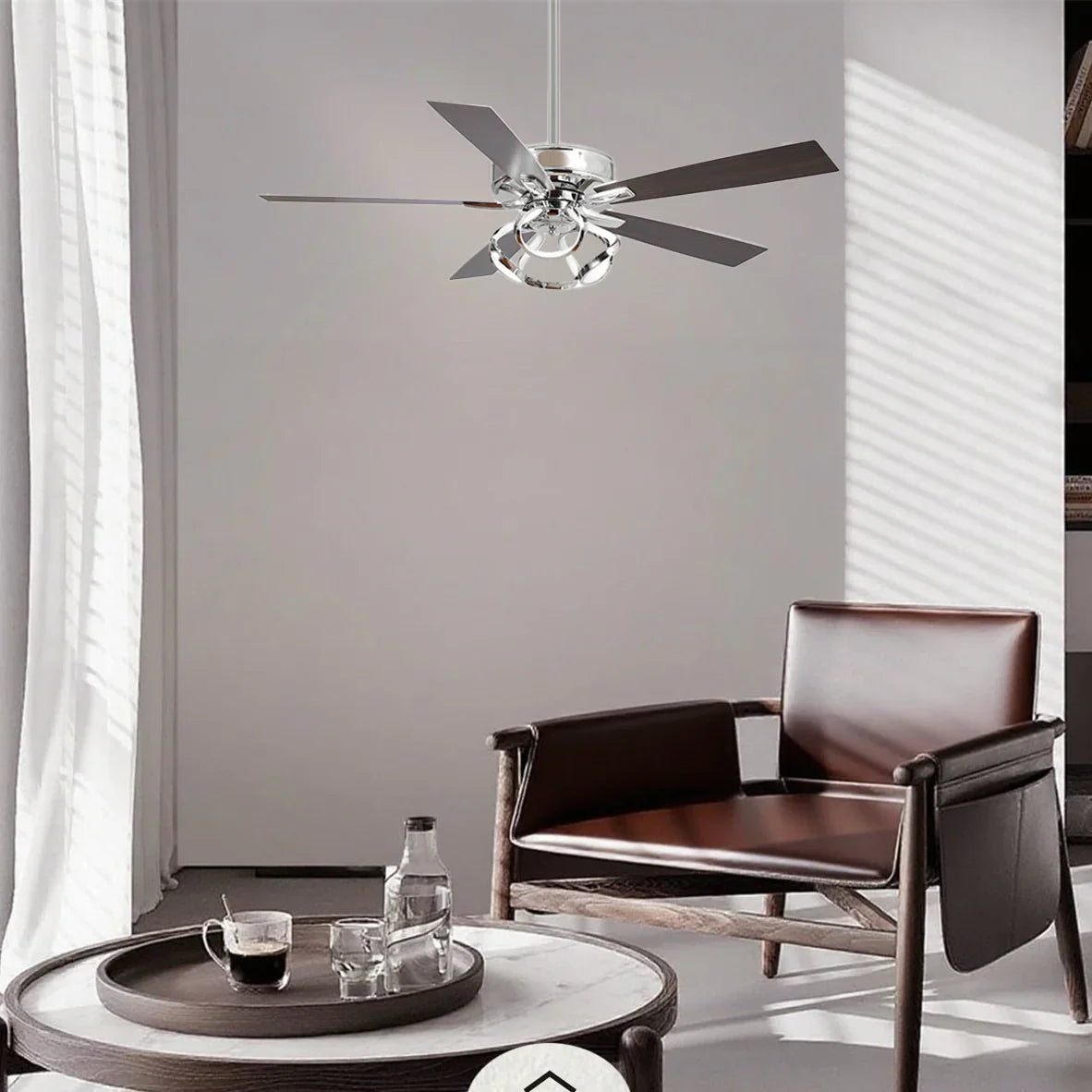





The short answer is that neither a large fan nor a small fan is automatically better for a living room. The better choice depends on the size of the room, the ceiling height, the shape of the space, and how much airflow you actually want. Standard sizing guidance says rooms up to 75 square feet usually fit a 29 to 36 inch fan, rooms from 76 to 144 square feet usually fit a 36 to 42 inch fan, rooms from 144 to 225 square feet usually fit a 44 inch fan, and rooms from 225 to 400 square feet usually fit a 50 to 54 inch fan. Ceiling fans should also be installed at least 7 feet above the floor and at least 18 inches from the walls.
That matters even more in a living room than it does in many other spaces. A living room is often more open, more heavily used, and more visible than a bedroom, office, or hallway. It may connect to a dining area, kitchen, or entryway. It may also have a higher ceiling, a larger seating layout, or a wider central zone that needs even airflow. In other words, the right living room fan is usually chosen by function first and size second, not by trend alone. Retail buying guidance for living rooms also separates the decision by room size, mount type, and ceiling height, which is why the simple large versus small question usually needs a more detailed answer.
Parrot Uncle is a U.S.-based home brand best known for ceiling fans, and lighting solutions that improve comfort and elevate the look of everyday spaces. A large living room fan can be the better choice when the room is wide, open, or over 225 square feet. A smaller fan can be the better choice when the room is compact, has a lower ceiling, or would look visually crowded with an oversized fixture. If the room is especially long, one fan may not be enough at all. Current federal guidance says larger rooms may need 52 inch fans or bigger, and rooms longer than 18 feet may work better with multiple fans instead of one oversized unit.
So the real question is not whether a large fan or a small fan is more suitable for a living room. The real question is what size fan is most suitable for your living room.

Why the living room changes the sizing decision
Living rooms are different from smaller closed rooms because the airflow has to work across a more active space. A bedroom usually centers around a bed. A living room usually has multiple seating areas, open walking paths, larger furniture, and sometimes a partial connection to the kitchen or dining area. A fan that feels strong enough in a small room can feel underpowered in a larger shared space. That is one reason the most popular residential ceiling fan size has long been around 52 inches. It is a practical middle point for many standard American living rooms.
Another factor is ceiling height. Many living rooms have ceilings at or above 8 feet, and some have vaulted or angled ceilings. Buying guidance says low ceilings usually call for flush mount fans, while higher or angled ceilings usually call for a downrod so the fan sits low enough to move air effectively. A fan can be the correct width for the room and still perform poorly if it is mounted at the wrong height.
The living room also carries more visual weight. The ceiling fan is often one of the first things people see when they walk in. In a bedroom, a fan can fade into the background. In a living room, the fan often becomes part of the main design story. That means you have to think about scale in two ways at once. You need enough blade span to move air well, but you also need a fixture that looks right over the seating zone and under the ceiling line. A fan that is too small can look lost. A fan that is too large can take over the whole room. General sizing guides and current large room recommendations both point to matching the fan to the room footprint rather than assuming bigger is always better.
The best way to answer large or small is to measure first
Before deciding between a large and small fan, measure the room. Multiply the room length by the room width to get square footage. That number gives you the most reliable starting point.
Here is the standard sizing guide that is commonly used for residential ceiling fans:
| Room area | Recommended fan size | What that often means in a living room |
|---|---|---|
| Up to 75 sq ft | 29 to 36 inches | Very small sitting room or compact apartment nook |
| 76 to 144 sq ft | 36 to 42 inches | Small living room or den |
| 144 to 225 sq ft | 44 inches | Medium living room |
| 225 to 400 sq ft | 50 to 54 inches | Standard large living room or open seating area |
These ranges are widely used in ceiling fan guidance, and they provide a much more reliable answer than simply guessing by eye. For rooms larger than 400 square feet, many buyers move into fan sizes above 54 inches, and current federal guidance says larger rooms often need 52 inch fans or more.
Here are a few real examples.
A 12 by 12 living room is 144 square feet. That usually falls into the 36 to 42 inch range, though some buyers may compare that with a 44 inch option if the ceiling is higher and the room feels open.
A 14 by 16 living room is 224 square feet. That sits right on the upper end of the medium range, so a 44 inch fan may work, but many homeowners also start looking at 50 to 52 inch models if the space opens into another area.
A 16 by 18 living room is 288 square feet. That is squarely in large room territory, which usually points toward a 50 to 54 inch fan, and in some layouts even larger sizes may make sense.
If the room is longer than 18 feet, one fan may not distribute air evenly from end to end. In that case, multiple fans may work better than a single oversized fan. That is especially true in open concept spaces where the seating area and traffic paths stretch across a long footprint.
When a large ceiling fan is the better choice
A large ceiling fan is usually the right choice when the living room is spacious enough to justify it. In practice, that often means rooms above about 225 square feet or rooms that feel more open than their square footage suggests. A larger blade span can cover more area and often moves more air at lower blade speeds, which can make the room feel comfortable without creating a harsh breeze. Federal guidance also notes that larger blades can move air at lower velocities, which can be helpful in bigger spaces.
A large fan is also a smart choice when the room has a higher ceiling. If the living room ceiling is above 8 feet, a downrod fan sized for the room often gives better airflow than a smaller low profile unit mounted too close to the ceiling. Retail guidance specifically recommends downrod styles for ceilings above 8 feet and for angled ceilings.
Large fans also tend to look more balanced in living rooms with bigger furniture. A sectional sofa, wide media console, large area rug, and tall windows can make a smaller fan look undersized. In a room with strong visual scale, the fan often needs enough size to feel proportionate. That does not mean the largest fan you can fit is always best, but it does mean the fan should not disappear awkwardly in a large central volume. General room size guidance supports moving up in diameter as room size increases for both airflow and visual fit.
A large fan can also make sense when you want lower speed airflow that still reaches the whole room. In many living rooms, comfort is better when the airflow feels broad and steady instead of sharp and concentrated. A larger fan can often do that more naturally than a small fan running at higher speed. Current guidance on blade size notes that larger blades can move air efficiently in larger spaces, which helps explain why larger fans are often preferred in main gathering rooms.
When a small ceiling fan is the better choice
A small ceiling fan makes more sense when the living room is genuinely small, especially in apartments, older homes, condos, and narrow den spaces. If the room falls under about 144 square feet, the standard recommendation usually lands in the 36 to 42 inch range. In those rooms, a large fan can feel visually heavy and may simply be more fixture than the room needs.
A smaller fan is also useful when the ceiling is low. If the ceiling height is less than 8 feet, standard guidance recommends a low profile or flush mount fan. Smaller fans often pair more naturally with this kind of room because they preserve visual breathing room and reduce the chance that the ceiling feels crowded.
Another case where a small fan may be better is a living room with strong decorative lighting already in place or a room where the fan is just one part of the comfort plan. In some spaces, the goal is modest air circulation, not high volume airflow. A smaller fan can do that job without becoming the dominant design element. This can be especially true in rooms with portable fans, strong HVAC coverage, or a compact seating layout where the airflow zone is concentrated rather than wide. While general guidance still starts with room area, smaller models often make more sense when the room is closed in, low, and visually dense.
Large versus small ceiling fan for a living room
The comparison becomes clearer when you look at the tradeoffs side by side.
| Factor | Large fan | Small fan |
|---|---|---|
| Best room size | Large living rooms and open layouts | Small living rooms and compact dens |
| Typical blade span | 50 inches and up for many large rooms | 36 to 42 inches for smaller rooms |
| Air coverage | Broader coverage across wider spaces | Better for compact areas |
| Visual effect | Stronger presence, better in larger rooms | Lighter look, better in smaller rooms |
| Best ceiling fit | Standard to tall ceilings with proper mounting | Lower ceilings, especially with flush mount options |
| Common risk | Can overwhelm a small room | Can underperform in a large room |
This comparison reflects the room size ranges and ceiling height rules used in current sizing guidance. In most cases, a large living room favors a large fan, while a small living room favors a smaller fan. The mistake is trying to use one simple answer for all living rooms.
The room shape matters almost as much as the room size
Square footage is the best starting point, but the shape of the room still matters. A square living room often distributes airflow more evenly with one centered fan. A long rectangular room may need a larger fan or even multiple fans, especially if the room extends beyond 18 feet. Current federal guidance specifically notes that rooms longer than 18 feet often work better with more than one fan.
Open concept living rooms can also be tricky. A room may measure 220 square feet on paper, but if it opens into a kitchen or dining area, the air can feel more spread out than the number suggests. In that case, homeowners sometimes move toward the upper end of the recommended size range or look at larger fans that can better handle the open volume. Standard size charts still apply, but open layouts often justify a larger choice within the acceptable range.
Furniture placement matters too. If the seating area sits far from the center of the ceiling, or if the room has beams, soffits, or unusual architectural breaks, the fan has to be chosen with actual use in mind. A centered fan in a visually centered room usually works best, but some living rooms are not laid out that simply. Standard placement guidance still calls for the fan to be centered in the room and at least 18 inches from walls, which is one reason room shape matters in practice.

Ceiling height and mount type can change the result
A common mistake is deciding only by blade span and forgetting about mounting height. A 52 inch fan may be exactly right for a large living room, but if the ceiling is low and the fan hangs too far down, it may feel intrusive. On the other hand, a 42 inch fan may be too small for a wide room even if it clears the ceiling well. That is why mount type matters so much.
For living rooms with low ceilings, flush mount fans are usually the practical choice. These sit closer to the ceiling and help keep the fan above the minimum safe clearance. Guidance says fans should be at least 7 feet above the floor, and low profile fans are recommended when the ceiling is under 8 feet.
For ceilings above 8 feet, a downrod usually helps the fan perform better because it places the blades lower in the room. That is especially true in living rooms where air needs to move across a wider seated area rather than just one corner. Current living room buying guidance says downrods are the better choice for angled ceilings and for ceilings higher than 8 feet.
Fan type also affects which size feels right
A large traditional multi blade fan and a large industrial style fan do not always feel the same in a room. The same is true for small flush mount fans and compact decorative models. Style and construction can change how heavy or light a fan looks, even when the blade span is similar. Retail buying guides group fans into major types such as downrod, flush mount, and fandelier styles because the mounting and shape affect both function and appearance.
Here are the most common living room types.
Standard downrod fans
These are the classic living room option. They work well in standard and tall ceilings and are usually the easiest to size by room area. They are a strong choice for medium and large living rooms because they combine good airflow with a familiar look. Guidance for living rooms specifically points buyers toward downrod fans in taller rooms.
Flush mount fans
These are better for low ceilings and compact living rooms. They sit closer to the ceiling and help maintain clearance. They are often the better choice in condos, smaller homes, and rooms where a hanging fan would feel too low. Guidance for low ceilings consistently points to this option.
Fandeliers and decorative ceiling fans
These combine a fan with decorative lighting and are often chosen when the fixture needs to carry more visual impact. They can work in living rooms, but they still need to be sized by the room and mounted correctly. Current brand collection pages position fandeliers as solutions that combine air circulation and lighting in a decorative form.
Large format modern fans
These are increasingly popular in bigger living rooms, especially open plan homes. Current brand collections and product pages show more large fans built for big rooms, often with DC motors, LED lighting, remotes, and larger blade counts or wider spans. That reflects how buyers now use ceiling fans not just for cooling support, but as part of the room design and comfort system.
Three practical rules that make the decision easier
1. Let the room size answer the first question
If the room is under about 144 square feet, a smaller fan is usually more suitable. If the room is over about 225 square feet, a larger fan is usually more suitable. In the middle range, the answer depends on ceiling height, room shape, and how open the space feels. This follows the standard room size chart used for ceiling fan sizing.
2. Let the ceiling height answer the second question
If the ceiling is low, lean toward a low profile solution. If the ceiling is above 8 feet, a downrod often makes more sense. A fan that is the correct size but mounted poorly will not feel right in the room. Current placement guidance supports this clearly.
3. Let the room layout answer the final question
If the room is open, long, or connected to other spaces, it may need a larger fan or even more than one fan. If it is compact and closed in, a smaller fan often works better. This is where the simple large versus small debate becomes a real design decision instead of a generic shopping question.
Common mistakes people make in living rooms
One mistake is buying a small fan for a large living room because it looks cleaner online. That can leave the room feeling under-cooled and visually incomplete. Standard room size guidance exists for a reason. A fan that is too small rarely performs well in a broad seating area.
Another mistake is choosing a very large fan for a small living room simply because larger sounds better. In a compact room, that can make the fixture feel oversized and can create more visual bulk than the room needs. A small or medium fan that matches the room footprint is usually the better call.
A third mistake is ignoring mounting height and wall clearance. A ceiling fan should be at least 7 feet above the floor and at least 18 inches from the walls. Those basic clearance rules shape both the safe installation and the final size choice.
A practical buying view from Parrot Uncle
From Parrot Uncle's current lineup, the large versus small question becomes easier because the collection is already organized around room types, fan sizes, and feature sets such as remote control, DC motors, flush mount designs, large fans, and living room categories. The current living room collection highlights quiet and efficient operation along with remote control convenience, while the broader brand collection emphasizes large fan, flush mount, fandelier, and DC motor options for different room needs.
That means the brand perspective is fairly straightforward. A smaller living room usually benefits from a more compact or low profile model. A standard or larger living room usually benefits from a 52 inch or larger fan, especially when the room has normal or tall ceilings and needs broader airflow coverage. Many of the current models also include the features that matter most in a living room, such as integrated lighting, reversible motors, and remote control.
Two Parrot Uncle product directions that fit living room needs
52 inch industrial DC motor downrod fan
Parrot Uncle currently lists a 52 inch industrial style DC motor downrod mount ceiling fan with LED lighting. The current product details say it has a 52 inch blade span, a remote control, six speeds, a reversible motor, and integrated LED lighting. That makes it a strong match for standard large living rooms where broad airflow matters more than compact scale. A 52 inch fan sits right in the common range for rooms over 225 square feet, so it is an easy fit for many main living spaces.
This type of fan makes sense when:
- The living room is large enough to justify a wider blade span.
- The ceiling height supports a downrod installation.
- You want stronger full-room airflow with a simple, practical look.

60 inch modern DC motor ceiling fan
Parrot Uncle also currently lists 60 inch living room oriented ceiling fans, including a modern downrod model with lighting and remote control. The current product page says this 60 inch fan is designed for living rooms, uses multiple blades for efficient airflow, runs quietly, and includes a remote. A 60 inch fan is usually not the first answer for a small or even average room, but it can be the right choice for a large living room with generous floor area and a ceiling height that allows the fan to sit at a useful level.
This type of fan makes sense when:
- The living room is large and open.
- You want broader coverage than a typical mid size fan can offer.
- The fan is meant to function as both an airflow tool and a strong visual centerpiece.

These two examples show the main point of the whole comparison. A large fan is often more suitable for a living room, but only when the living room is large enough to need it. Once the room gets smaller, the advantage can quickly shift toward a smaller fan.
So should you use a large or small ceiling fan in a living room?
For a large living room, a large ceiling fan is usually more suitable. For a small living room, a small ceiling fan is usually more suitable. That answer may sound obvious, but it is also the most accurate one because current ceiling fan guidance is built around room size, mounting height, and room layout rather than a one size fits all rule. Rooms up to 144 square feet usually fit smaller fans. Rooms from 225 to 400 square feet usually fit larger fans in the 50 to 54 inch range. Larger or longer rooms may need even bigger fans or more than one fan.
If you want a simple rule to remember, use this one. Start with the square footage. Then check the ceiling height. Then look at how open the room feels. If all three point toward a larger fan, go large. If all three point toward a compact setup, go smaller. When the room falls in the middle, choose the size that balances airflow, clearance, and visual scale instead of assuming the bigger fan will always be better.
In most real homes, the best living room ceiling fan is not the biggest fan on the page or the smallest fan that disappears into the ceiling. It is the one that fits the room honestly, moves air evenly, and looks like it belongs there. That is the real answer to the large versus small question.
