
Choosing a ceiling light sounds simple until you get down to the two styles that look close on paper but behave differently in a real room. That is exactly what happens with flush mount and semi-flush mount lighting. Both are close-to-the-ceiling fixtures. Both are used for general room light. Both work in bedrooms, hallways, entryways, kitchens, and other everyday spaces. But they do not sit the same way on the ceiling, they do not shape the room in the same way, and they do not always solve the same design problem. Current U.S. buying guides define a flush mount as a fixture that sits directly against the ceiling, while a semi-flush mount drops slightly below the ceiling on a short stem or support.
Parrot Uncle is a U.S.-based home brand best known for ceiling fans, and lighting solutions that improve comfort and elevate the look of everyday spaces. We usually look at this choice in a very practical way. A flush mount is often the cleaner answer when ceiling height is tight and the room needs a simple, low-profile light. A semi-flush mount is often the better answer when you want the fixture to do more visual work and add some depth without hanging as low as a pendant or chandelier. Parrot Uncle's current lighting collections reflect that split. Its flush mount collection is positioned around low ceilings, narrow hallways, bedrooms, kitchens, bathrooms, and entryways, while its semi-flush collection leans more decorative and is presented for living rooms, dining areas, and hallways.
That is the core difference in one sentence. Flush mount lighting stays tighter to the ceiling and keeps the look more compact. Semi-flush mount lighting hangs slightly below the ceiling and usually adds more visual dimension and a little more ceiling bounce. Consumer lighting guides say semi-flush fixtures often throw more light upward toward the ceiling because of that gap, while flush mounts stay more contained and visually quiet.

The short answer
If you want the easiest version of the answer, here it is. Flush mount lights are best when you need maximum clearance and a cleaner, simpler ceiling profile. Semi-flush mount lights are best when you want a little more style, a little more depth, and a fixture that feels more decorative without dropping as low as a pendant. Both are still close-to-the-ceiling lights, and both are often recommended in rooms with lower ceilings. U.S. guides note that these fixtures are especially useful in spaces with ceilings of 8 feet or less because overhead clearance is limited.
What is a flush mount light
A flush mount light sits directly against the ceiling surface. It does not use a visible chain, long stem, or downrod. That lower profile is the main reason flush mount fixtures are so common in homes. Lighting guides say they work especially well on standard-height ceilings, especially around 8 feet, because they preserve overhead space and keep the fixture from feeling intrusive. U.S. retail guidance also points to flush mounts as strong fits for closets, small bedrooms, bathrooms, and other rooms where a lower-hanging fixture could feel awkward.
From the Parrot Uncle point of view, this is exactly where flush mount lighting earns its place. The brand's current collection describes flush mounts as a strong choice for low ceilings, narrow hallways, kitchens, bathrooms, bedrooms, and entryways. The emphasis is on sleek lines, subtle presence, and enough light for smaller or mid-sized rooms without adding visual clutter overhead.
What is a semi-flush mount light
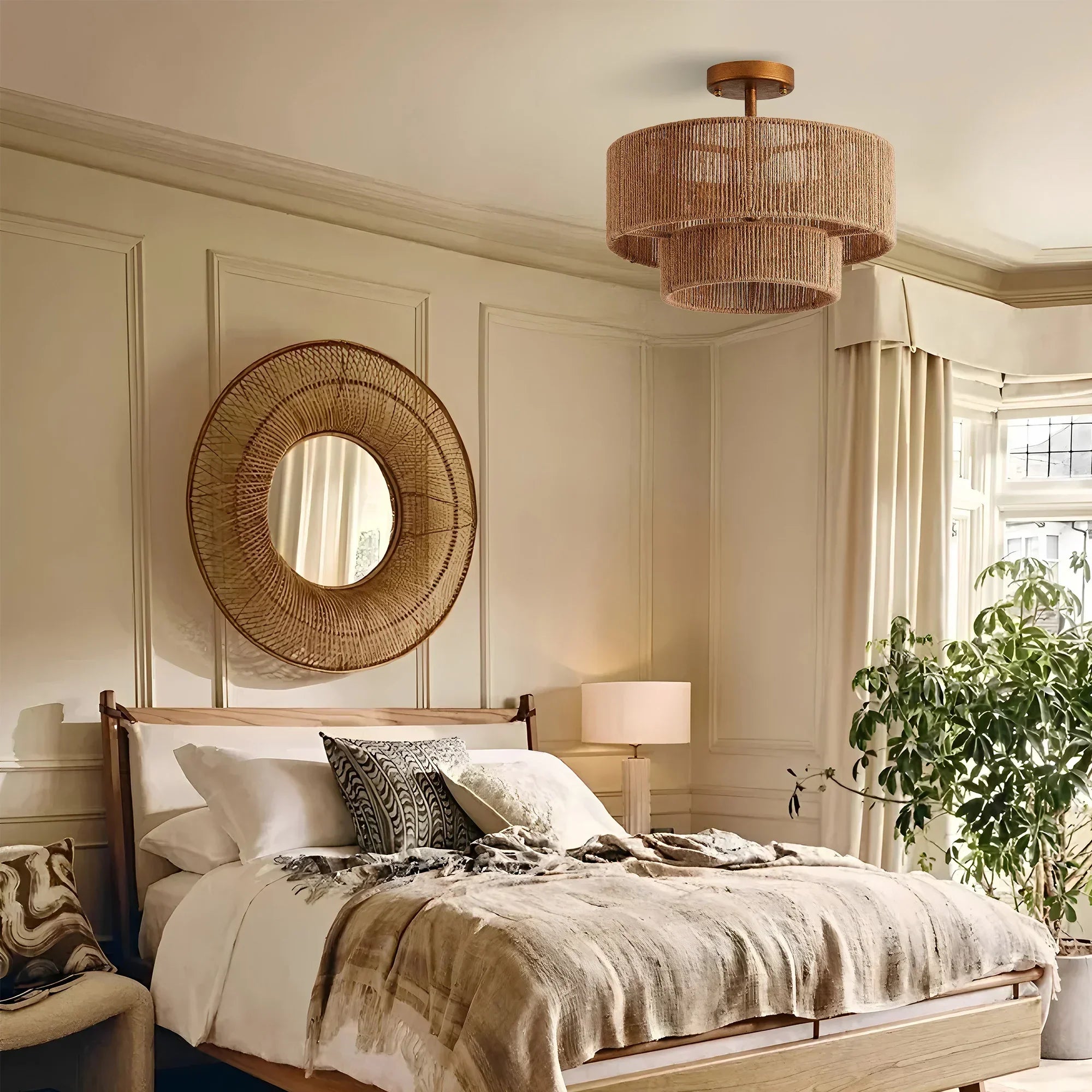
A semi-flush mount light still stays close to the ceiling, but it does not sit tight against it. Instead, it hangs a few inches below the canopy and leaves a small gap between the fixture and the ceiling. One current lighting guide says that short drop is often around 4 to 8 inches. Because of that small drop, semi-flush fixtures often look more decorative and can allow more light to reflect upward onto the ceiling as well as down into the room.
This is why semi-flush fixtures are often chosen when homeowners want more than a basic utility light. U.S. buying guides describe them as more decorative than flush mounts, and current collection copy from Parrot Uncle places them in living rooms, dining areas, and hallways where a decorative touch matters as much as basic illumination. In other words, a semi-flush fixture still solves a clearance problem, but it also starts acting more like a design feature.
Flush mount vs semi-flush mount at a glance
| Feature | Flush mount lighting | Semi-flush mount lighting |
|---|---|---|
| How it sits | Directly against the ceiling | Hangs slightly below the ceiling |
| Visual effect | Clean, compact, quiet | More layered and decorative |
| Best fit | Low ceilings, tight spaces, simple rooms | Rooms that need more style without a long drop |
| Light feel | General room light with a tighter profile | General room light with more openness and some ceiling bounce |
| Common rooms | Hallways, closets, bathrooms, bedrooms, entryways | Dining areas, living rooms, hallways, entryways, bedrooms |
This table summarizes current U.S. consumer guidance and Parrot Uncle's current collection descriptions.

The 3 differences that matter most
1. Ceiling profile and clearance
The first difference is the one most shoppers notice right away. A flush mount sits closer to the ceiling, so it keeps the room feeling more open vertically. That matters in homes with standard 8-foot ceilings, small bedrooms, hallways, closets, bathrooms, and tight entry areas. U.S. buying guides consistently describe flush mounts as the lower-profile choice and one of the strongest options for rooms where ceiling height is limited.
A semi-flush mount also works in many standard-height rooms, but it uses some of that vertical space on purpose. That slight drop gives the fixture more presence and shape. In a room with enough clearance, that can be a real advantage because it helps the light feel intentional instead of flat. But in a very tight hallway or a small room where every inch matters, the extra drop may not help as much as a true flush mount. Current U.S. guidance says both flush and semi-flush fixtures are commonly used in spaces with ceilings 8 feet or lower, but it also makes clear that flush mounts have the lower profile while semi-flush designs are often better when you want something more decorative.
A practical way to think about this is simple. If the room already feels short, a flush mount usually helps it breathe. If the room has enough breathing room but still needs a close-to-ceiling light, a semi-flush may add more character without crossing into pendant territory. One U.S. guide notes that once a light hangs more than 8 inches down, you are moving into pendant or chandelier territory rather than close-to-ceiling lighting.
2. Light distribution and room feel
The second difference is how the fixture makes the room feel after the light is on. Both flush and semi-flush fixtures are used for general ambient lighting, not narrow task lighting. U.S. home-improvement guidance says close-to-the-ceiling lights are commonly chosen when you need widespread room illumination in places like hallways, entryways, bedrooms, closets, and bathrooms.
The semi-flush design changes that light slightly because the gap above the fixture lets more light escape upward and bounce off the ceiling. Lighting guides say this can make the room feel more open and add a softer ambient layer, especially in spaces where you want the ceiling to glow a bit instead of having all the light pushed straight down. That is one reason semi-flush lights are often recommended over tables, in entertaining spaces, or in rooms where you want a more inviting look.
Flush mounts are more contained. That does not make them worse. In fact, it is often exactly what makes them useful. They deliver general light in a simple way and keep the fixture itself from becoming too dominant. That is why flush mounts are common in practical rooms and circulation spaces. Parrot Uncle's flush collection leans into that role by presenting flush mounts for kitchens, bathrooms, bedrooms, and entryways where clean lines and reliable everyday light matter more than a dramatic ceiling statement.
There is also a style implication here. A flush mount usually reads like part of the ceiling. A semi-flush usually reads more like a true fixture. If the room feels visually plain and needs a little more shape, a semi-flush can solve that. If the room already has plenty going on and just needs dependable overhead light, flush is often the better match.
3. Best rooms and design goals
The third difference is where each style tends to work best. Current U.S. buying guides say flush mounts are especially useful in closets, small bedrooms, bathrooms, and other lower-profile spaces. They also work well in hallways, foyers, and compact rooms where you want clear sightlines and broad general light.
Semi-flush mounts overlap with some of those spaces, but the usual room list shifts a bit. U.S. guidance and current Parrot Uncle collection copy point more toward dining areas, living rooms, hallways, and entryways for semi-flush fixtures because these rooms often benefit from a decorative ceiling light that still stays reasonably close to the ceiling. Semi-flush fixtures can also be a smart answer above a table or countertop when you want more direct illumination without using a longer pendant.
At Parrot Uncle, this split is easy to see in the current catalog. Flush mount lighting is positioned around subtle, sleek lighting for lower-profile rooms. Semi-flush lighting is positioned as a balance between elegance and function, with more decorative shapes, stronger dining-room presence, and room lists that lean more toward living and entertaining spaces. That is a useful way to shop because it keeps the decision tied to real room needs instead of just personal taste.

How to choose the right one for your home
At Parrot Uncle, we think most homeowners can make this decision faster by asking three questions.
First, how much ceiling clearance do you really have. If the room is tight, or the fixture will sit in a hallway, closet, small bedroom, or bathroom, flush mount is often the safer choice because it hugs the ceiling more closely. Current U.S. guides repeatedly position flush mounts as a strong fit for low ceilings and compact spaces.
Second, does the room need the light to be seen as decor. If the answer is yes, semi-flush usually has the edge. It has more shape, more drop, and more visual presence. That is why it is so often used in dining areas, entryways, and living rooms where the fixture helps define the room.
Third, what kind of light feel do you want. If you want a simpler, more contained overhead light, flush mount usually makes more sense. If you want a bit more softness, dimension, and ceiling glow, semi-flush tends to do that better because of the open space above the fixture.
A few sizing tips that actually help
One current U.S. buying guide offers a simple rule of thumb for ceiling light size: add the room's length and width in feet, then use that total as the fixture width in inches. For example, a 14-by-20-foot room points to a fixture around 34 inches wide. The same guide says the average flush mount is about 13 inches wide, with common sizes ranging from 12 to 24 inches, while semi-flush fixtures can range from about 6.25 to 23 inches wide. That is not a strict law, but it is a useful planning baseline.
That sizing rule matters because many people choose only by style. A fixture can look beautiful in a product photo and still be too small for the room or too bulky for the ceiling height. In practical terms, flush mounts tend to work best when you need a fixture that stays visually controlled. Semi-flush fixtures need a little more breathing room because the drop and shape make them more noticeable.
Can you mix flush mount and semi-flush mount lighting in one home
Yes, and in many homes that is actually the smartest approach. A house does not need one ceiling-light profile everywhere. It is common to use flush mounts in the tightest rooms and traffic areas, then switch to semi-flush fixtures where you want more style or a stronger visual center. U.S. consumer guides show both styles as versatile enough for casual and formal interiors, and Parrot Uncle's current room-based collections also support that mix by grouping each type into the spaces where it works best.
For example, a hallway or small bedroom may feel best with a flush mount because the ceiling stays visually clean. A dining nook or entry area may benefit from a semi-flush because the room needs more presence from the overhead fixture. The goal is not to force one fixture style through the whole house. The goal is to match the room.
What Parrot Uncle would choose in real rooms
In a low hallway, pantry, closet, or compact bedroom, we would usually lean flush mount first. The reason is simple. Those rooms benefit from clear headroom, broad general light, and a fixture that does not ask for much visual attention. That is exactly how Parrot Uncle currently positions its flush mount collection.
In an entryway, dining area, or a living room corner that needs more style, we would look harder at semi-flush. That small drop gives the room more depth, and the fixture has a better chance of feeling like part of the decor instead of just a ceiling utility piece. Parrot Uncle's semi-flush collection leans clearly in that direction with more decorative language and room suggestions that point to living rooms, dining areas, and hallways.
So from the Parrot Uncle point of view, the difference is not only technical. It is also emotional. Flush mount is usually about keeping things clean, easy, and efficient. Semi-flush is about adding a little more style without giving up the practical benefits of a close-to-the-ceiling fixture.
Two Parrot Uncle products worth considering
1. Golden Sunburst 2 Light Flush Mount Lighting
If you want a clearer example of what flush mount lighting is meant to do, this is a better fit. The Golden Sunburst 2 Light Flush Mount Lighting is a true flush mount fixture, and its low 3-inch height helps show why this category works so well in rooms where ceiling clearance matters. Parrot Uncle lists it in a dry location category and highlights it as a good fit for a closet, hall, bedroom, or hallway, which matches the practical role flush mount lighting usually plays in everyday homes. It also includes an LED light source with a maximum power of 16W, along with a clean, streamlined design that keeps the ceiling line simple instead of visually heavy.
From the Parrot Uncle point of view, this product makes the flush mount category easier to understand because it stays close to the ceiling while still giving the room a finished look. Its overall size of 21.65 by 21.65 by 3 inches also helps explain why flush mount fixtures are often the safer choice in hallways, bedrooms, and other spaces where a lower-hanging light could feel bulky or out of place.

2. 16 Inch 3-Light Farmhouse Golden Semi-Flush Mount Ceiling Lighting
For the semi-flush side, this fixture shows what the extra drop can add. The current product page describes a 16-inch golden iron semi-flush with a farmhouse look, three E12 bulbs up to 40W each, dry-location use, and a design intended for spaces like bedrooms and corridors. The description also says the semi-flush profile balances decorative appeal with height limits, which is exactly what many homeowners want from this category.
From the Parrot Uncle point of view, this product works well as a real-world example because it sits right in the middle of the category. It stays close enough to the ceiling for standard rooms, but it adds more presence and warmth than a basic flush fixture. That is the core semi-flush value in a nutshell. You get more shape and style without needing the space a pendant or chandelier would demand.

Final take
So what is the difference between flush mount and semi-flush mount lighting?
A flush mount sits directly against the ceiling and is usually the better answer when you want the lowest profile, the most clearance, and a simple look for smaller or tighter spaces. A semi-flush hangs a few inches down and is usually the better answer when you want a bit more style, more visual depth, and a slightly more open light effect while still keeping the fixture close to the ceiling. That is the most accurate and useful way to frame the choice.
At Parrot Uncle, we would put it this way. Choose flush mount when the room needs simplicity and space efficiency. Choose semi-flush when the room needs more personality without moving into full hanging-light territory. Once you look at the fixture through that lens, the decision gets much easier.
FAQ
Q1.Is flush mount better for low ceilings?
In many cases, yes. Flush mounts have the lower profile and are commonly recommended for standard-height ceilings, small bedrooms, bathrooms, closets, and other rooms where clearance matters most.
Q2.Does semi-flush mount give more light?
It can create a more open light effect because the gap above the fixture allows more light to bounce upward toward the ceiling. That often makes the room feel a bit more layered than a tight flush mount fixture.
Q3.Can I use semi-flush lighting in a room with an 8-foot ceiling?
Yes. Current U.S. guides treat both flush and semi-flush fixtures as standard close-to-the-ceiling options for lower ceilings. The right choice depends on how much drop you want and how decorative you want the fixture to feel.
Q4.Where should I use flush mount lighting?
Flush mount fixtures are often used in hallways, bedrooms, bathrooms, closets, kitchens, and entryways, especially where you want broad general light with a low-profile look. Parrot Uncle's current collection description points to these same kinds of spaces.
Q5.Where should I use semi-flush mount lighting?
Semi-flush fixtures are often a strong fit for dining areas, living rooms, hallways, entryways, and similar spaces where you want the ceiling light to add a decorative touch while still staying fairly close to the ceiling.
Q6.How do I estimate the right fixture size?
A common rule of thumb is to add the room's length and width in feet and use that number in inches as a starting fixture diameter. Current U.S. buying guidance also says average flush mounts are around 13 inches wide, though both flush and semi-flush fixtures come in a wide range of sizes.