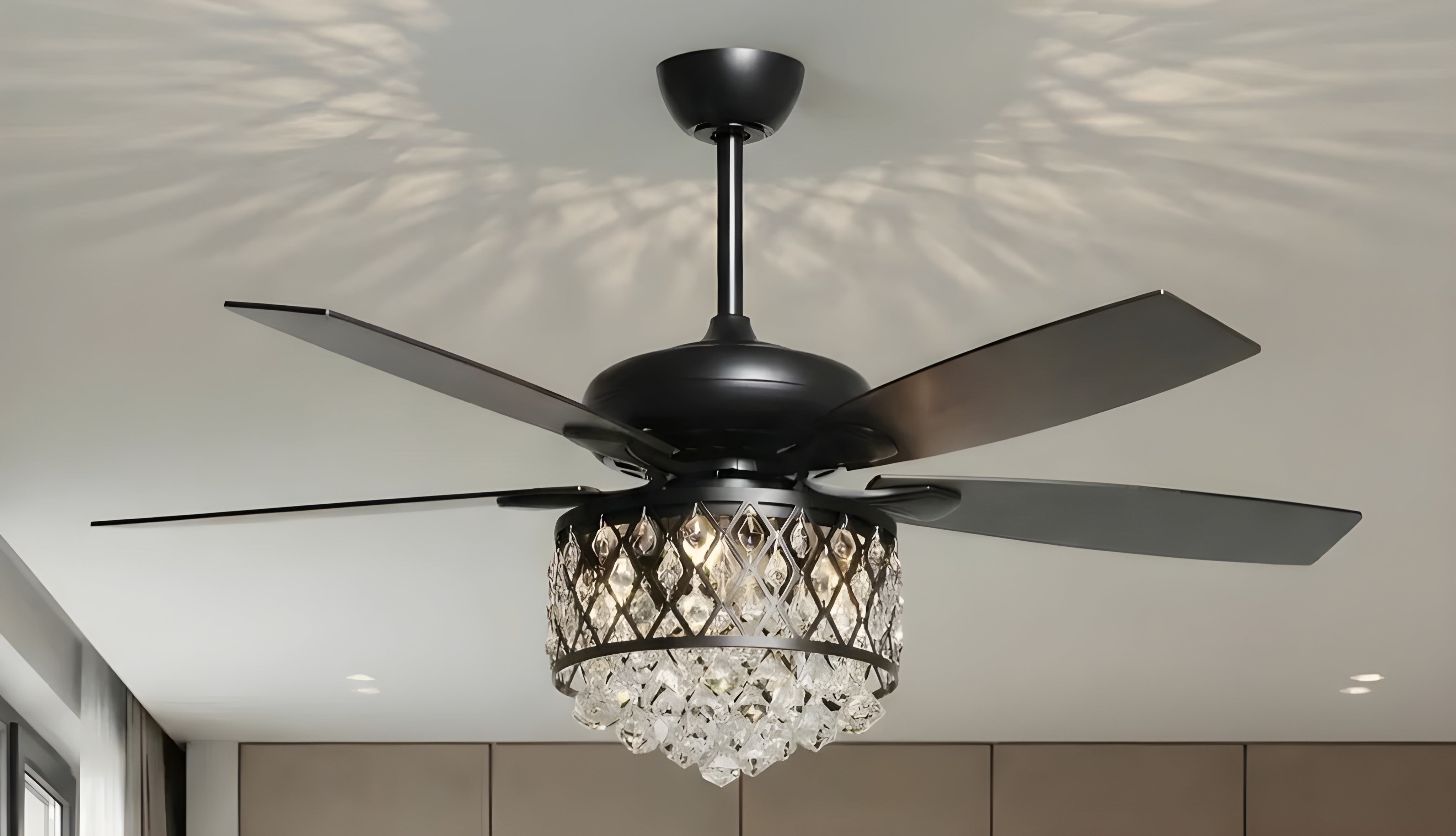
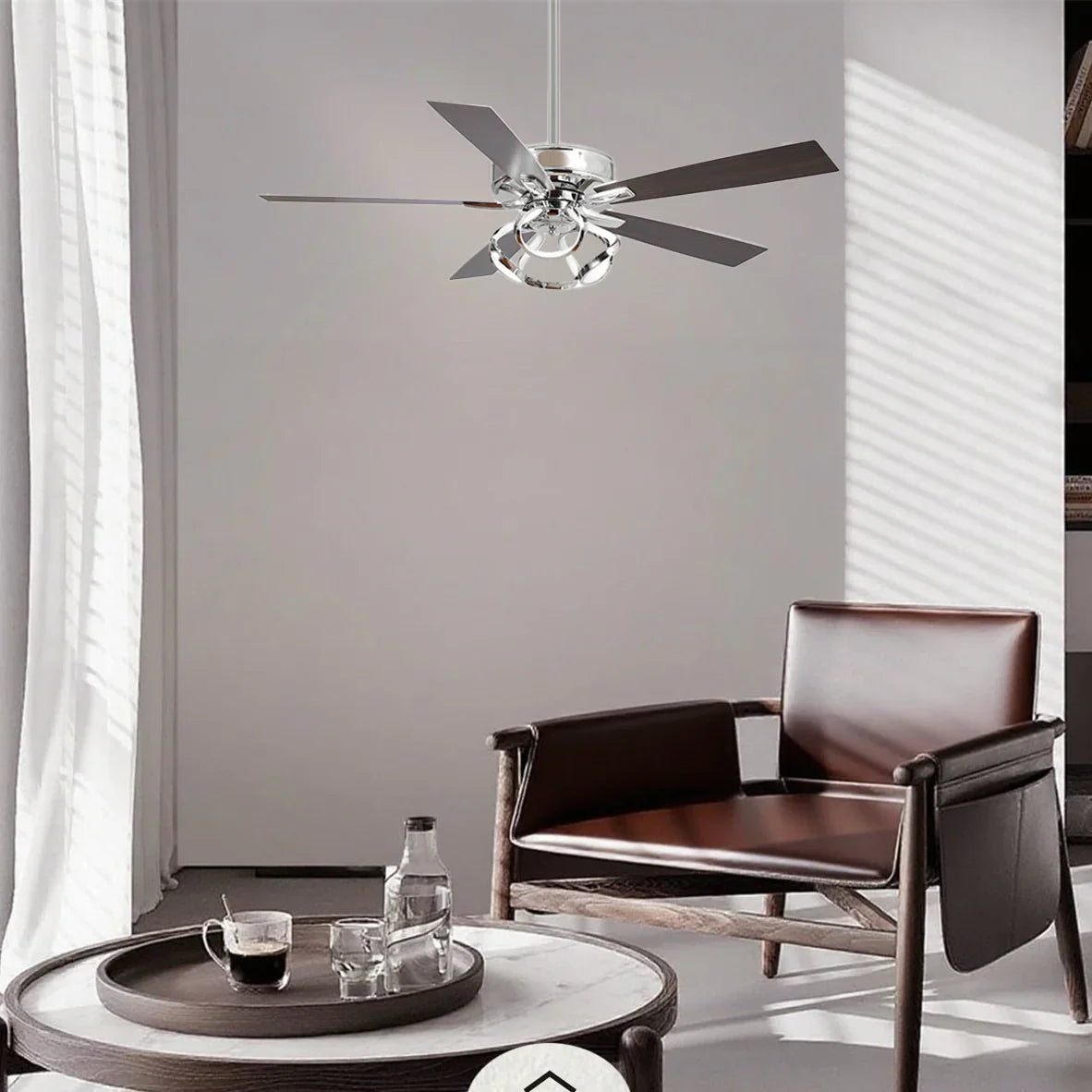
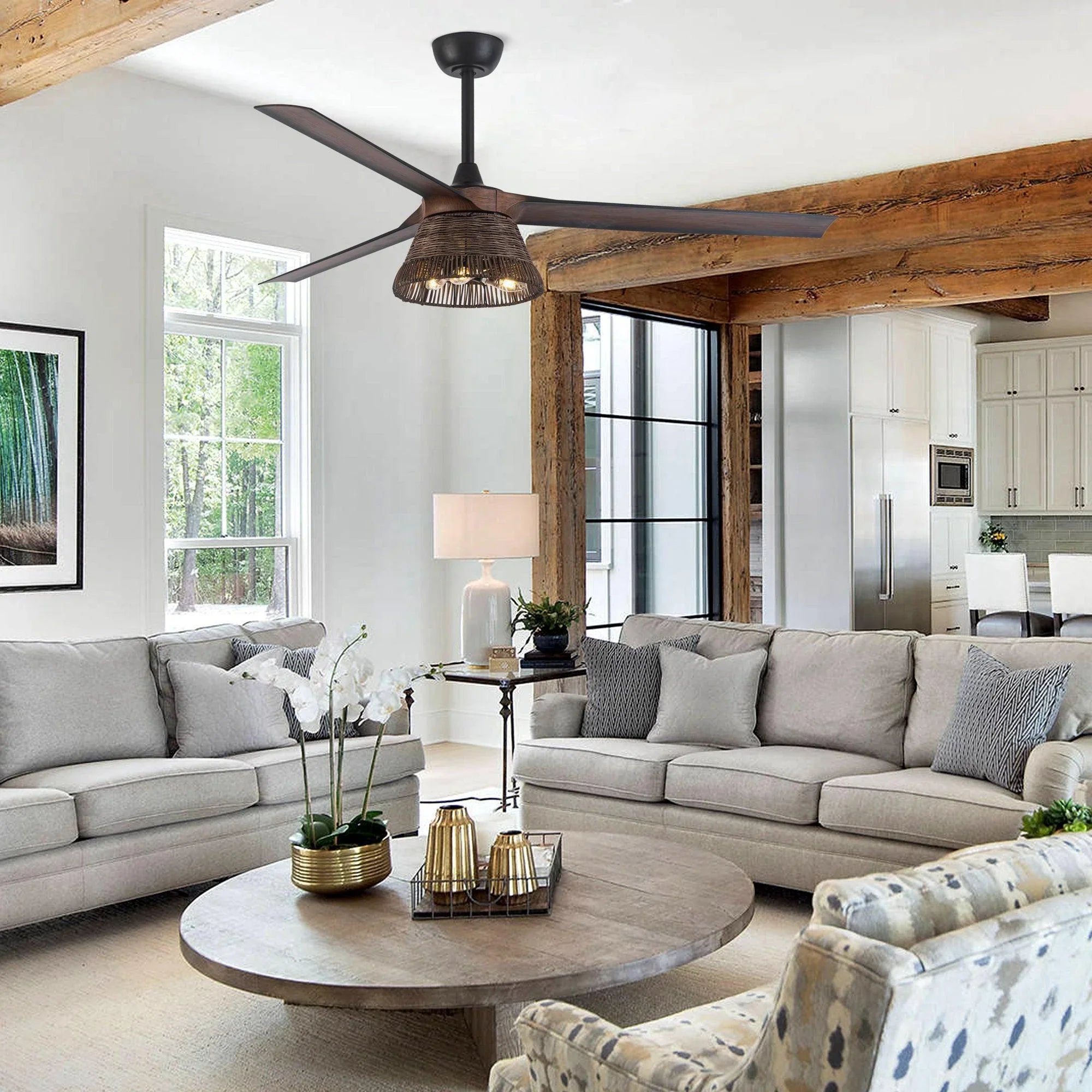


If you are shopping for a caged ceiling fan and asking whether the blades should sit inside or outside the cage, the most honest answer is this: inside the cage is usually the better design for a true caged ceiling fan. That layout is the whole point of an enclosed fan. It keeps the moving blades less exposed, fits compact spaces well, and is often chosen for low ceilings, smaller rooms, or homes where extra protection matters. Current category pages and product descriptions from major U.S. ceiling fan sellers describe enclosed or caged fans as models where the cage surrounds the blades and adds a layer of protection.
Parrot Uncle is a U.S.-based home brand best known for ceiling fans, and lighting solutions that improve comfort and elevate the look of everyday spaces. In the real market, some fans use a cage as a style feature around the light kit while the main fan blades stay outside the cage. Those products can still look industrial or farmhouse, but they are not the same thing as a true enclosed blade fan. In other words, "outside the cage" is not usually the better version of a caged blade design. It is often a different product category with different priorities.
So which is better? For most people specifically searching for a caged ceiling fan, blades inside the cage are better. If your main goal is safety, a compact footprint, or a lower profile look, the inside-cage layout wins. If your main goal is stronger airflow across a wider area, an outside-blade design may perform better in some cases, but then you are often stepping away from the real enclosed fan concept and toward a more traditional ceiling fan layout.

Why this question matters more than it seems
A lot of buyers think blade placement is just a visual choice. It is not. Blade placement changes the entire product. It affects how protected the blades are, how large the fan can be, how close the fan can sit to the ceiling, and how the airflow behaves in the room. A research summary on ceiling fan performance notes that speed, diameter, blade count, blade angle, and blade location all affect the airflow pattern created in a space. That means where the blades sit is not a minor detail. It is part of the actual performance design.
That is why the inside versus outside question cannot be answered with style alone. You have to think about what the product is meant to solve. A true enclosed fan is built to keep the blades protected within a frame. A more open fan with a caged light feature is usually built more like a standard ceiling fan, where airflow, blade span, and visual drama may carry more weight than enclosure. Both can be good products, but they do not solve the same problem in the same way.
What a true caged fan is supposed to do
When most shoppers say "caged ceiling fan," they mean a fan with the moving blades inside a protective frame. That is how current enclosed fan category pages and product pages describe the design. The cage is not just decoration. It is there to keep the moving parts less exposed while still allowing the fan to circulate air. That is why enclosed ceiling fans are often promoted as a smart option for homes with kids or for tighter spaces where a more exposed blade setup may feel less comfortable.
Parrot Uncle frames its caged fan collection in a very similar way. Its collection copy says the caged design blends style and safety, uses a protective cage around the blades, and works well in spaces such as kitchens or patios. It also says these fans come in sizes for both small and large rooms and are designed to provide strong airflow with quiet operation. That tells you the intended design logic very clearly. The cage is part of the blade system, not just a separate trim piece.
So if the question is asked in the strictest design sense, the answer is simple. For a true caged ceiling fan, the blades belong inside the cage. That is the defining feature of the product. Once the blades move outside the cage, you are usually dealing with a different kind of fan.
Where inside the cage is better
1. Safety and peace of mind
This is the clearest win for the inside-cage layout. Major U.S. ceiling fan category pages say the cage adds protection and keeps the moving blades less exposed. Parrot Uncle says the protective cage around the blades is ideal for homes with kids or low ceilings. Put simply, if the blades are enclosed, there is another barrier between people and the rotating fan parts. That is the core advantage.
That does not mean standard ceiling fans are unsafe when installed correctly. U.S. guidance still says ceiling fans should be installed at least 7 feet above the floor and at least 18 inches from the walls, with 8 to 9 feet above the floor preferred when ceiling height allows for better airflow. But within that safe installation framework, an enclosed blade fan still gives you another layer of protection by reducing direct access to the blades themselves.
This is one reason enclosed blade fans are so popular in compact spaces. In a small breakfast nook, kids room, entry, walk-in closet, or low ceiling room, buyers often want cooling and light without the visual and practical feel of wide exposed blades. In those rooms, blades inside the cage are usually the better answer.
2. A better match for low ceilings and compact rooms
Inside-cage models are often built in small, low profile, or flush mount formats. That makes sense, because enclosed fans are commonly used where space is limited. U.S. guidance says hugger or low profile ceiling fans are ideal for rooms with ceilings under 8 feet, though they usually do not move as much air as a regular fan because the blades sit closer to the ceiling. Parrot Uncle also positions many flush mount fans as a strong fit for small rooms and lower headroom.
This is where the inside-cage design becomes especially practical. In a tight room, keeping the fan compact can matter just as much as raw airflow. A caged fan with enclosed blades can deliver air movement and lighting without making the ceiling feel crowded. That is a real benefit in homes where scale, clearance, and visual comfort matter.
There is another practical point here. Standard U.S. sizing guidance for conventional ceiling fans starts at 29 to 36 inches for rooms up to 75 square feet. Many enclosed or caged fans are smaller than that because they are designed as compact specialty products. That makes them useful, but it also means they should be judged by the job they are built for, not by the same expectations you would place on a traditional 48-inch or 52-inch fan.
3. Better for the actual purpose of a caged fan
This may sound obvious, but it matters. If you are buying a caged fan because you like the enclosed look, want less exposed blades, or need a smaller fixture, then blades inside the cage are better because they serve that purpose directly. The design is coherent. The cage and the fan work as one idea.
An outside-blade setup can still look great, especially in industrial or farmhouse spaces, but it changes the product logic. Now the cage is usually protecting the bulbs or acting as a visual detail rather than enclosing the moving fan system. That can be attractive, but it is not the same answer to the same problem.

Where outside the cage can be better
This is the part where the answer needs nuance. While inside the cage is usually better for a true caged fan, outside the cage can be better in one major way: airflow potential.
A more open fan can often support a larger blade span, and larger span is one of the variables that affects airflow. Research on ceiling fan aerodynamics notes that diameter, blade number, blade angle, and blade location all play a role in flow behavior. U.S. installation guidance also says regular mounted fans and downrod setups can provide better airflow than flush mount fans because the blades sit farther from the ceiling. So if you compare a compact enclosed fan to a larger, more open fan with outside blades, the open design may move more air across a bigger room.
That does not mean outside blades are automatically better. It means they can be better when your priority is stronger circulation over a larger area and you do not need the protection or compact shape of an enclosed blade system. A larger traditional fan has more room to work with. It can use broader blade sweep, more typical mounting geometry, and a room size target that lines up with stronger airflow expectations.
This is why some buyers feel disappointed when they expect a tiny enclosed fandelier to cool a room the same way a medium or large traditional ceiling fan does. The two products are often solving different problems. One is compact and protective. The other is more open and airflow-focused. The better choice depends on which problem matters more in your room.
A clean side-by-side comparison
| Feature | Blades inside the cage | Blades outside the cage |
|---|---|---|
| Best use | True enclosed fan design | More traditional fan behavior with cage styling |
| Safety feel | Better, because blades are less exposed | Less protected, because blades remain open |
| Fit for tight spaces | Usually better | Usually less compact |
| Fit for low ceilings | Often better in flush mount formats | Depends on blade span and mount |
| Airflow potential | Can be good, but often limited by compact size and low profile builds | Can be stronger, especially with larger spans and more open layouts |
| Design identity | A real caged or enclosed blade fan | Often a standard fan with a caged light or industrial detail |
This table reflects the basic tradeoff seen across current product categories and installation guidance. Inside the cage wins on protection and compact design. Outside the cage can win on traditional airflow performance, but it often stops being a true enclosed blade fan in the process.
What "better" means for real buyers
Most people do not shop for a ceiling fan in abstract terms. They are trying to solve one of three real problems.
The first problem is safety and comfort in a tighter space. If that is your problem, blades inside the cage are better. The protected look is part of why enclosed fans exist, and the current market still presents them that way.
The second problem is getting more useful airflow in a room that has enough ceiling height and enough open area for a larger sweep. If that is your problem, an outside-blade design may be better, especially if it uses a more traditional blade layout and a mount that allows stronger airflow. U.S. guidance and category information both point in that direction.
The third problem is style. Some homeowners want the enclosed look because it feels cleaner, more decorative, or better suited to farmhouse, industrial, or modern spaces. Others want the broader, familiar presence of a standard ceiling fan with a statement light kit. Neither taste is wrong. But from a pure design logic standpoint, blades inside the cage are the better match for the caged fan idea itself.
A practical view from Parrot Uncle
From a Parrot Uncle perspective, the best way to think about this question is not "inside versus outside" in the abstract. It is better to ask what role the fan needs to play in the room. Parrot Uncle's caged fan collection emphasizes strong airflow, quiet operation, durable materials, and a distinctive enclosed style. At the same time, the broader lineup also includes industrial ceiling fans where the cage is part of the light kit design rather than a full blade enclosure. That means the brand itself shows both sides of the comparison in a useful way.
If you want a fan where the cage protects the blades and defines the look, choose the enclosed route. If you want a fan that leans more traditional in airflow behavior while still giving you an industrial cage accent, an outside-blade design can make sense. But again, those are not identical product concepts.
24-inch Farmhouse Reversible Fandelier Ceiling Fan
A strong example of the inside-cage approach is the 24-inch Farmhouse DC Motor Downrod Mount Reversible Fandelier Ceiling Fan with Lighting and Remote Control. On its product page, Parrot Uncle describes it as a caged fan with a decorated cage design. It has a 24-inch blade span, 3 blades, 6 speeds, a downrod mount, a DC motor, and a listed maximum airflow of 1429 CFM. It is recommended for small rooms up to 75 square feet.
This product shows what the enclosed blade idea is trying to do. It is compact, decorative, and clearly built around the fan-and-cage concept as one integrated fixture. It is not pretending to be a large traditional air mover. It is trying to bring airflow, light, and design into a smaller footprint. For buyers who want the caged look and the protection that comes with a more enclosed form, this is exactly the kind of product that makes sense.
Another detail matters here: this model uses a downrod mount rather than a flush mount. That can help airflow compared with very tight low profile designs, because U.S. guidance says fans mounted closer to the ceiling generally move less air than regular fans. So even within the caged category, design choices like mount type still matter.

48-inch Ummuhan Industrial Flush Mount Ceiling Fan
Now look at the 48-inch Ummuhan Industrial Flush Mount Ceiling Fan with Lighting. This model is listed with a 48-inch blade span, 5 blades, 3 speeds, a flush mount installation, and a maximum airflow of 2481 CFM. The product page says the metal wire cage protects the exposed light sources, while the fan itself uses 48-inch blades and a low profile motor housing. In other words, the cage is part of the light kit styling, not an enclosure around the moving blades.
This is the clearest real-world example of why "outside the cage" can sometimes be better only in a limited sense. It may deliver more airflow than a smaller enclosed fandelier because it is a much larger fan with a more traditional blade layout. But it is not really a better enclosed blade fan. It is a different product that happens to use caged styling around the light. If your goal is stronger room coverage and you like the industrial look, it can be a very practical choice. If your goal is a true protected blade enclosure, it is not solving that same problem.
This comparison also shows why buyers should be careful with product names. Two fans can both be described with the word "caged" and still behave very differently. One may enclose the blades. Another may use the cage around the bulbs while the blades stay open. That is exactly why the inside versus outside question matters.

Product comparison table
| Product | Blade position | Span | Motor | Speeds | Mount | Listed airflow | Best fit |
|---|---|---|---|---|---|---|---|
| 24-inch Farmhouse DC Motor Downrod Mount Reversible Fandelier | Inside the cage | 24 inch | DC | 6 | Downrod | 1429 CFM | Small rooms that want a real enclosed fan look |
| 48-inch Ummuhan Industrial Flush Mount Ceiling Fan with Lighting | Outside the cage | 48 inch | AC | 3 | Flush mount | 2481 CFM | Buyers who want larger traditional blades plus an industrial caged light look |
This product table makes the tradeoff easy to see. The enclosed blade model is better at being a true caged fan. The larger outside-blade model is better at behaving like a more traditional ceiling fan while still offering industrial cage styling. Which is better depends on the job, but if the question is specifically about a caged ceiling fan design, the inside-cage layout is the more correct answer.
Common mistakes buyers make
One common mistake is assuming that any fan with metal cage details is an enclosed blade fan. That is not always true. Some products enclose the blades. Some only cage the light kit. The difference matters for both safety expectations and airflow expectations.
Another mistake is assuming that a protected enclosed fan should cool like a much larger standard fan. Sometimes it can perform very well, but many enclosed models are compact, low profile, or decorative by design. U.S. guidance already makes clear that low profile setups move less air than regular fans because the blades sit closer to the ceiling. So product role and mount type matter just as much as style.
A third mistake is deciding only by looks. A fan is still a functional device. Blade location, diameter, blade angle, and mount all affect how the room will feel once the fan is on. The research and product data both point to the same lesson: performance comes from the full design, not just the label on the box.
Final verdict
So, Caged Ceiling Fan Blades Inside vs. Outside the Cage: Which Is Better?
For most buyers, inside the cage is better. It is the better choice for a true caged ceiling fan because it protects the moving blades, fits the compact and low-profile purpose of enclosed fans, and matches what the category is supposed to be. That is why enclosed fan pages and caged fan collections consistently describe the cage as a protective feature around the blades.
Blades outside the cage can still make sense, but usually for a different reason. That layout may support a larger, more traditional fan form and can sometimes deliver stronger airflow over a wider area. Still, once the blades move outside the cage, the fan is often no longer a true enclosed blade design. It becomes a different type of ceiling fan with caged styling rather than a real caged blade system.
From a Parrot Uncle angle, the best buying rule is simple. If you want the actual benefits that make caged ceiling fans popular, choose a model with blades inside the cage. If you want broader traditional airflow and only like the industrial cage look as a style element, then an outside-blade design can work. But for the question as asked, the stronger answer is clear: inside the cage is better.