

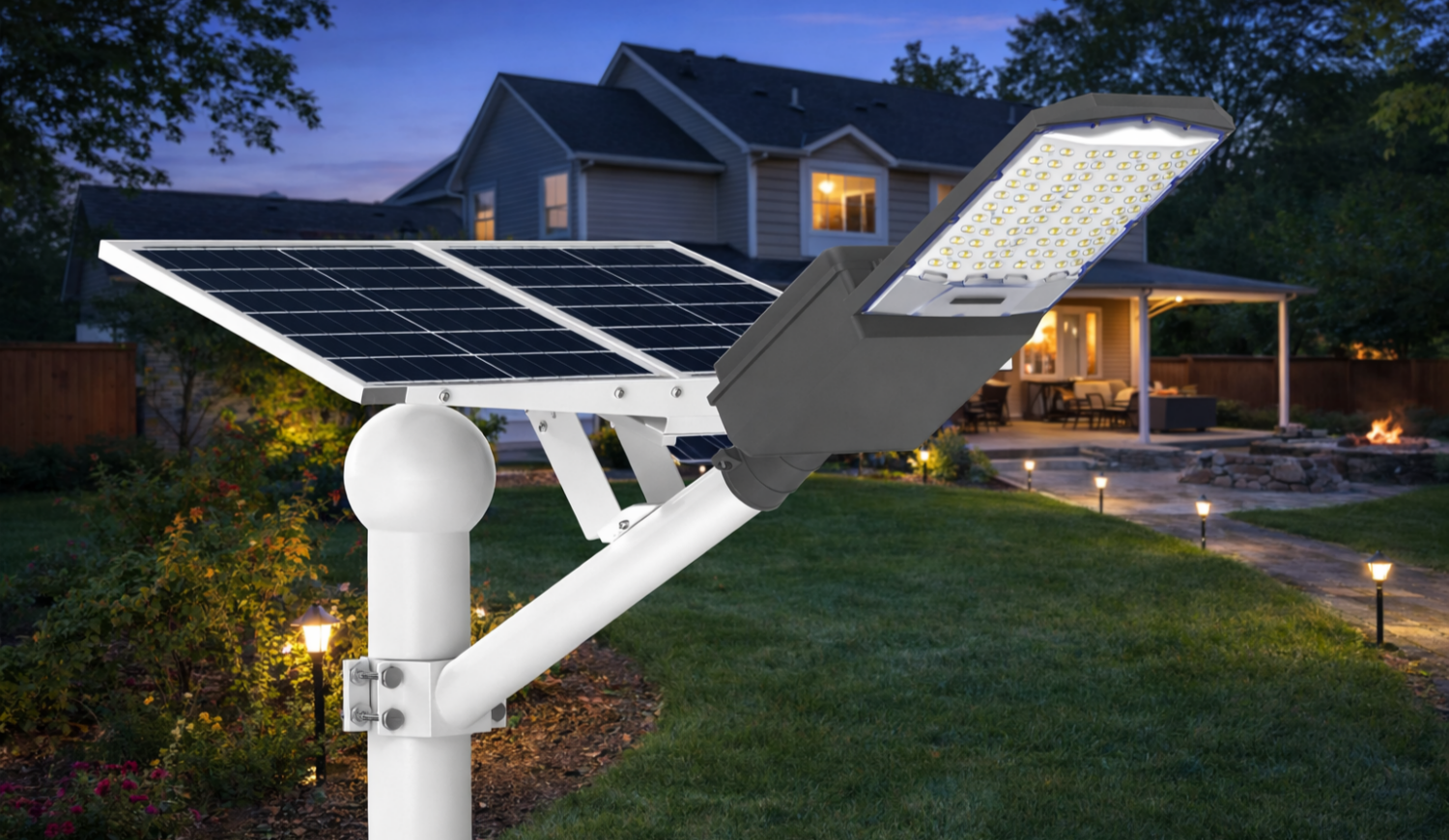
Outdoor solar lighting can be one of the easiest upgrades you can make to a yard, patio, or walkway. You get light where you need it, without trenching for wire or hiring an electrician for basic installs. But solar lights also have a reputation for being dim, short lived, or unreliable when they are placed in shade or built with low grade parts.
From Parrot Uncle’s point of view, the best solar light is the one that matches your use case and your local conditions. A pathway light that looks great in a sunny backyard may disappoint on a shaded porch. A motion light that feels bright near the house might be overkill along a garden edge.
Parrot Uncle is a U.S.-based home brand best known for ceiling fans, fandeliers, and lighting solutions that improve comfort and elevate the look of everyday spaces. Building on our long-standing experience in lighting and home design, we also offer outdoor solar lighting made for practical, low-hassle use around the home.In this article, we draw on that experience to answer one key question: Outdoor Solar Lighting Buying Guide: What to Look For Before You Buy.

Solar outdoor lighting use cases
Outdoor solar lights work best when you have at least a few hours of direct sun most days and you want light for safety, comfort, or curb appeal without adding wiring. Solar is not one single product type. It is a category that includes several very different jobs.
Pathways and steps
This is the most common use and the easiest to get right.
-
Mark edges of a walkway so guests can see where to step.
-
Add soft light on stairs, risers, or deck steps.
-
Reduce trip hazards around transitions, like from patio to lawn.
Path lighting is usually about guidance, not high brightness. If you can see the path edges clearly, it is doing its job.
Landscape accents
Accent lighting is about directing light at something you want to show off.
-
Spotlights for trees, shrubs, or architectural details.
-
Uplights under a feature plant or a textured wall.
-
Low glow around flower beds to add depth at night.
Accent lights can look great, but they depend heavily on placement and beam direction.
Entry, driveway, and security
For areas where you want clear visibility, solar can still work, but you need to buy more carefully.
-
Wall lights near doors for hands free arrival.
-
Motion sensor lights for side yards or gates.
-
Flood style lights aimed at a driveway edge.
For security lighting, brightness, battery capacity, and sensor performance matter much more than styling.
Pros and cons of solar outdoor lights
Solar lighting has real advantages, but it also has limits. A smart purchase starts with accepting both.
Advantages
-
No wiring for most installs, which reduces cost and effort.
-
Flexible placement, so you can adjust lights as your yard changes.
-
No direct electric use from the home once installed, since the light is powered by the solar panel charging an internal battery.
Disadvantages
-
Performance depends on sun exposure, season, and weather.
-
Batteries are wear items. They will lose capacity over time.
-
Weather exposure can shorten life if the housing, seals, and materials are not built for outdoor conditions.
Here is the quick reality check table we use at Parrot Uncle when helping customers pick between solar and wired lighting.
| Factor | Solar lighting | Wired low voltage lighting |
|---|---|---|
| Installation effort | Usually easy | More planning and wiring |
| Brightness potential | Ranges from low to high, but limited by solar charge | Can be consistently bright |
| Reliability | Depends on sun and battery | More consistent |
| Best for | Paths, accents, light use areas | Large areas, all night output, high brightness |

How long do outdoor solar lights last
People often ask for one number. The truth is that solar light lifespan is controlled by the weakest component in the system. In most consumer products, the battery and weather exposure are the main limiters, not the LED itself.
What parts wear out first
A solar light is a small system:
-
Solar panel converts light into electricity.
-
Battery stores energy for night use.
-
LED and driver electronics produce light.
-
Housing, lens, and seals keep water out.
LEDs are known for long service life compared with older lighting types. The US Department of Energy describes LEDs as long lasting and durable compared with incandescent lighting.
That is good news, but it does not guarantee your solar light will last decades. Outdoors, the battery, seals, and materials usually determine how long the product stays useful.
Battery life is the practical limiter
Most solar lights charge and discharge frequently, often close to daily. Rechargeable batteries have a finite cycle life. A 2025 research paper on portable NiMH batteries notes endurance cycling results in the hundreds of cycles and cites studies showing NiMH batteries can reach up to about 1000 charge and discharge cycles before a major capacity loss threshold.
That does not mean your solar light battery will always reach 1000 cycles. Real conditions include heat, cold, partial charging, and moisture risk. The point is simple: the battery is a consumable component.
Weather and sun exposure also matter
Outdoor exposure stresses materials and seals over time. Scientific reviews of UV exposure describe how solar UV radiation contributes to degradation of materials used outdoors, including plastics, and that higher exposure accelerates wear.
This is why two solar lights with the same battery type can age very differently: one sits in full sun with heat and UV every day, while another is shaded and cooler.
A realistic way to think about lifespan
Instead of asking, how many years will it last, ask these two questions:
-
Can I replace the battery if performance drops
-
Is the housing and weather protection built for my location
If the battery is replaceable and the housing is well sealed, you can often extend the useful life of the light significantly by swapping the battery and keeping the solar panel clean.

Spacing, brightness, and placement
This is where most solar lighting projects succeed or fail. You can buy a good product and still get weak results if it is placed in shade, aimed poorly, or spaced too far apart.
Step 1: Start with the purpose
Use one of these three goals, then shop to match it.
-
Ambience: soft glow for patios, gardens, and mood.
-
Guidance: clear edges for paths and steps.
-
Task and security: bright light for doors, driveways, and motion zones.
If you try to use a small decorative stake light as a security light, it will disappoint every time.
Step 2: Use lumens the right way
Lumens describe light output. More lumens usually means more visibility, but also more battery demand.
Many consumer guides group outdoor brightness by purpose, such as low lumens for accent and higher output for entrances and security.
A practical lumen guide that works for many US homes looks like this:
| Area | Typical goal | Common lumen range per light |
|---|---|---|
| Garden ambience | Soft glow | 10 to 100 |
| Pathway edges | Safe guidance | 50 to 200 |
| Steps and deck edges | Foot placement | 30 to 150 |
| Door and entry | Visibility | 300 to 800 |
| Motion security | Attention and coverage | 700 to 1500 plus |
These are not strict rules. They are starting points. If you install multiple lights, you can use lower lumens per fixture and still get good overall visibility.
Step 3: Plan spacing based on beam, not guesswork
Spacing depends on brightness, beam spread, and mounting height. For pathway lights, a common starting layout is placing fixtures several feet apart, then adjusting after dark to eliminate dark gaps. Review based buying guides often describe spacing in the 6 to 8 foot range for many path lights, but also emphasize testing in your own yard because beam spread varies by model.
A simple method that works:
-
Place lights closer than you think, then remove one if it looks too busy.
-
Walk the path at night and look for dark gaps.
-
Avoid lining lights like runway markers. Slight staggering often looks more natural.
Placement rules that improve performance fast
Solar lights need light on the panel, not just in the area you want to illuminate.
-
Put panels in direct sun when possible, not under eaves or heavy tree cover.
-
Aim spotlights after dark. Small angle changes can double the visual impact.
-
Keep solar panels clean. Dust and pollen reduce charging.
If your yard is shaded most of the day, consider solar lights with a separate panel on a cord so you can put the panel in sun and the light where you need it. This is often the easiest fix for shade problems.
Weather resistance and IP ratings
If you want solar lights that survive real outdoor exposure, you need to understand IP ratings. The IEC explains that the first IP digit rates protection against solids like dust and the second digit rates protection against liquids like water.
Quick outdoor guidance many buyers use:
-
Covered porch: lower water exposure, but still needs splash resistance.
-
Open yard: needs stronger water protection for wind driven rain.
-
Ground level and near sprinklers: needs better sealing and drainage design.
Do not assume outdoor automatically means waterproof. Look at the rating and the intended install location.

Can you leave solar lights outside in winter
In most parts of the US, outdoor solar lights are designed to stay outside year round. But winter changes two things that matter a lot: how much energy you can collect and how batteries behave in cold temperatures.
Solar charging is lower in winter
Winter often brings shorter days, a lower sun angle, and more cloudy weather in many regions. The US Department of Energy has winter weather guidance for solar photovoltaic systems that highlights winter conditions as a real operational factor and discusses risk from snow and severe weather.
For small solar lights, the practical takeaway is that less charging can mean shorter nightly runtime.
Cold reduces battery performance
Battery performance drops in cold conditions. Scientific reviews of lithium ion batteries describe significant performance challenges at low temperatures, including reduced capacity and other limitations.
You may notice solar lights turning off earlier at night in winter even if the product worked well in summer.
What Parrot Uncle recommends for winter success
Keep it simple:
-
Make sure the panel is not covered by snow or leaf debris.
-
If the light has multiple brightness modes, use a lower mode in winter for longer runtime.
-
If the battery is replaceable and the light is older, a fresh battery often helps.
Can solar light batteries be replaced
Some can. Some cannot. This is one of the biggest long term value checks you can do before you buy.
Two common battery designs
-
Replaceable standard cells: often AA or AAA rechargeable cells in a compartment.
-
Sealed integrated packs: often lithium based, built into the housing and not intended for user replacement.
Replaceable batteries are a major advantage because they let you restore performance when the light starts fading, instead of replacing the entire fixture.
How to tell before you buy
Look for one of these clear signals in the listing or manual:
-
Battery type is listed and the door or compartment is shown.
-
Replacement battery instructions are included.
-
The product mentions replaceable battery or user serviceable battery.
If the listing never mentions the battery at all, it is often an integrated design.
Battery safety and disposal
High energy density batteries need proper care when used or handled, including when removed from the product. The US Consumer Product Safety Commission notes that these batteries require enhanced safety systems and additional care.
For disposal and recycling, the US Environmental Protection Agency provides guidance on managing used lithium ion batteries and highlights the hazards of improper handling and shipping.
Practical safety rules:
-
Do not mix old and new rechargeable cells in the same light.
-
Use the same chemistry and voltage type recommended by the manufacturer.
-
Recycle batteries through appropriate programs instead of putting them in household trash.

FAQ
1. Can solar lights stay out in the rain?
Many outdoor solar lights are built for rain, but resistance depends on the enclosure design and its IP rating. The IEC describes how IP codes rate protection against solids and liquids, which is the basis for many outdoor enclosure claims.
If your lights sit in open exposure with wind driven rain, choose a higher water protection rating than you would for a covered porch.
2. Will solar lights work on cloudy days?
They can, but they usually charge less. Solar panels can generate electricity from diffuse light, but output is reduced when clouds block direct sun.
In practice, this often means solar lights may turn on but run for fewer hours after a cloudy day.
3. How do I know if solar lights are right for my yard?
Ask these three questions:
-
Do I get direct sun on the panel for at least part of the day
-
Is my goal ambience or guidance rather than stadium level brightness
-
Do I want an easy install without wiring
If your yard is mostly shade, look for designs with a separate solar panel that can be placed in a sunny spot, or consider wired lighting for critical areas.
4. How many lumens should a good solar light have?
It depends on the job. A path marker can be effective at much lower lumens than a door light. Consumer guides commonly separate outdoor lighting needs by purpose, with low output for accent and much higher output for entry and security lighting.
Use the lumen table in this guide as a starting point and adjust based on how many fixtures you plan to install.
5. How do you fix solar lights?
Most solar light problems come from a short list:
-
Dirty or shaded panel reducing charge.
-
Battery aging and holding less energy.
-
Water intrusion from damaged seals or cracked housing.
Try these first:
-
Clean the panel and reposition for more sun.
-
Replace the battery if the design allows it.
-
Dry the unit and inspect the lens and seals if moisture is visible inside.
If the housing is cracked or water has repeatedly entered, replacement is often the safest option.