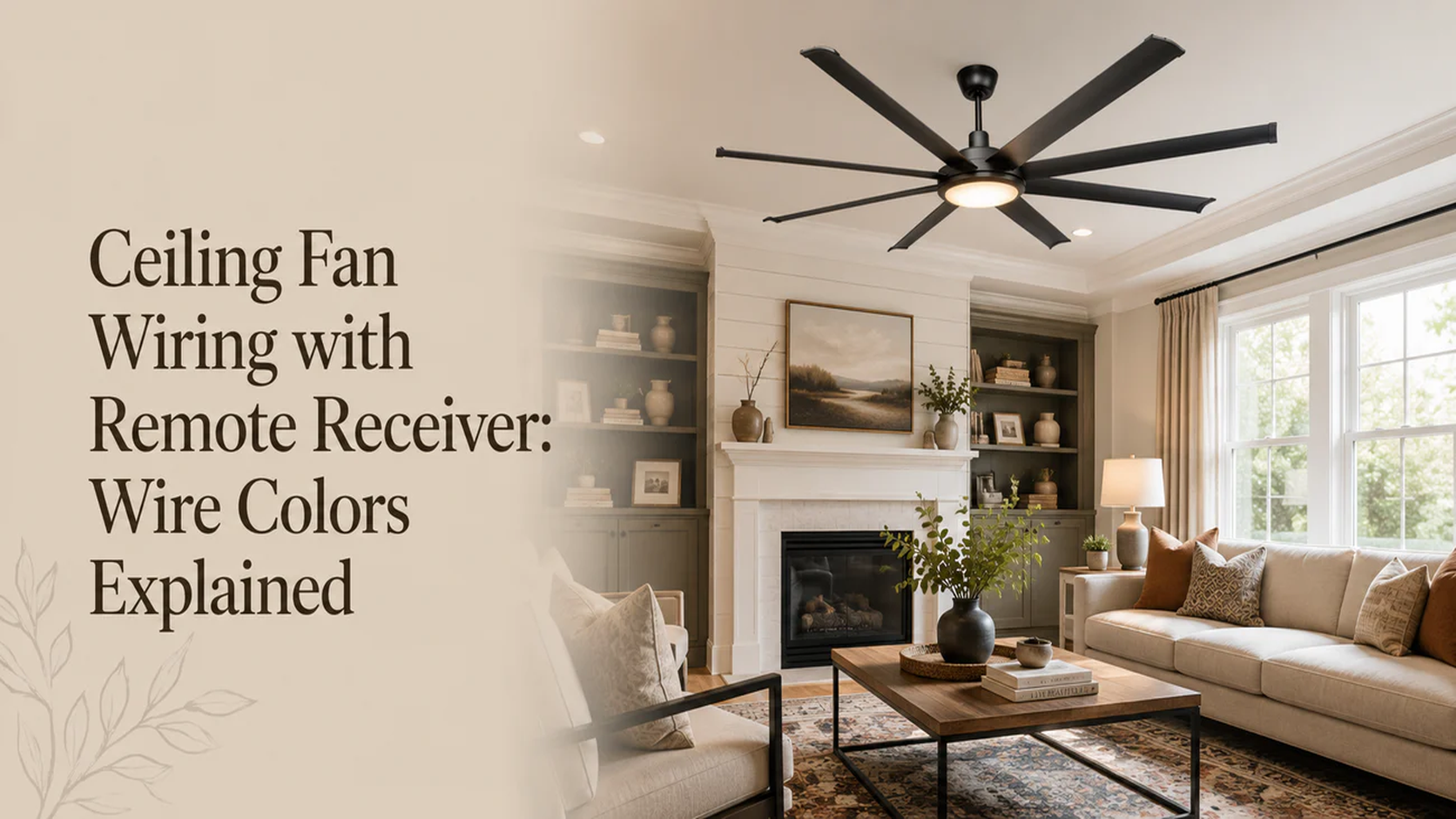


A ceiling fan is more than a decorative fixture. In many American homes, it helps a bedroom feel easier to sleep in, makes a living room more comfortable in summer, and supports better air circulation throughout the year. But the best ceiling fan is not always the biggest, most expensive, or most stylish one. The right fan is the one that fits the room, moves air well, runs quietly, and matches how people actually use the space.
Ceiling fans do not lower the room temperature like air conditioning. Instead, they move air across your skin and create a cooling effect. That is why a good fan can make a room feel more comfortable even when the thermostat is set a little higher. In summer, this can help reduce pressure on the air conditioner. In winter, a reversible fan can help move warm air that collects near the ceiling.
Parrot Uncle is a U.S.-based home brand best known for ceiling fans, and pendant lighting solutions that improve comfort and elevate the look of everyday spaces.For home comfort, the most important features are size, airflow, motor quality, noise level, controls, lighting, and room fit. When those details work together, a ceiling fan becomes part of the home’s comfort system, not just something spinning above the room.

Comfort Comes First
The best ceiling fan should improve how the room feels. That means the airflow should be strong enough to make a difference but smooth enough that it does not feel harsh.
A bedroom fan should be quiet and gentle. A living room fan should move air across a wider seating area. A dining room fan should provide soft circulation without blowing too hard over the table. A large open room needs more airflow and a wider blade span.
| Room | What matters most |
|---|---|
| Bedroom | Quiet airflow, remote control, soft light |
| Living room | Wider airflow, balanced design |
| Dining room | Gentle speed control, attractive style |
| Home office | Low noise, steady comfort |
| Large room | Bigger blade span, stronger airflow |
The best fan is not the one you notice the most. It is the one that makes the room feel better without adding noise, wobble, or visual clutter.
Airflow Is the Main Test
Airflow is usually measured in CFM, which means cubic feet per minute. It tells you how much air the fan can move. A higher CFM can be useful in large spaces, but more airflow is not always better. The goal is the right airflow for the room.
A small bedroom does not need the same power as a great room. A fan that is too strong may feel uncomfortable when people are sitting or sleeping under it. A fan that is too weak may look nice but fail to improve comfort.
For everyday use, a good fan should perform well at low and medium speeds. If a fan only feels useful at the highest setting, it may not be the best choice for that room.
Choose the Right Size
Fan size should match the room. A fan that is too small will not move enough air. A fan that is too large may look awkward or create too much airflow.

| Room size | Suggested fan size |
|---|---|
| Under 100 sq ft | Small ceiling fan |
| 100 to 225 sq ft | 44 to 52 inches |
| 225 to 350 sq ft | 52 to 60 inches |
| Over 350 sq ft | 60 inches or larger |
Ceiling height also matters. For low ceilings, a flush mount or hugger fan may be better. For higher ceilings, a downrod helps place the fan at a better height for airflow. If the ceiling is sloped, check whether the fan supports angled installation.
Motor Quality Matters
The motor is one of the most important parts of a ceiling fan. A good motor helps the fan run smoothly, quietly, and efficiently.
AC motor fans are common and reliable. DC motor fans are often quieter, more energy efficient, and more flexible because they usually offer more speed settings. For bedrooms and living rooms, a DC motor can be a strong choice because comfort often depends on quiet, controlled airflow.
| Motor type | Main benefit |
|---|---|
| AC motor | Common, reliable, often budget-friendly |
| DC motor | Quiet, efficient, usually more speed options |
| Reversible motor | Useful for summer and winter airflow |
In summer, most ceiling fans should spin counterclockwise to push air downward. In winter, many reversible fans can spin clockwise at low speed to help circulate warm air.

Quiet Operation Is Essential
Noise can ruin a ceiling fan. Even if the airflow is strong, a fan that hums, clicks, rattles, or wobbles can become annoying fast.
Quiet operation is especially important in bedrooms, nurseries, home offices, and living rooms. A good ceiling fan should feel stable at different speeds. It should not shake or make distracting sounds.
Fan noise can come from poor installation, loose parts, unbalanced blades, or a weak motor. That is why safe, correct installation matters. The fan should be mounted on a fan-rated electrical box, not a standard light fixture box.
Blade Count Is Not Everything
Many people think more blades mean more airflow. That is not always true. Blade design, blade pitch, motor strength, fan speed, and fan size all matter.
A three-blade fan can move a lot of air if it has a strong motor and good blade shape. A five-blade fan can feel smooth and balanced, but it is not automatically better.
Instead of focusing only on blade count, look at the full design. Ask whether the fan fits the room, has enough airflow, runs quietly, and offers the controls you need.
Lighting Should Match the Room
Many modern ceiling fans include LED lights. This can be useful in bedrooms, living rooms, dining rooms, and home offices where one fixture needs to provide both air movement and overhead lighting.
The best fan light should match how the room is used. Warm light is better for bedrooms and dining rooms. Brighter neutral light works better for offices or active living spaces. Dimmable lighting is helpful because it gives more control throughout the day.
| Room | Good lighting choice |
|---|---|
| Bedroom | Warm, dimmable light |
| Living room | Warm to neutral light |
| Dining room | Soft warm light |
| Home office | Brighter neutral light |
A fan with a light is not always necessary. If the room already has lamps, recessed lights, or a chandelier, a fan without a light may look cleaner.
Controls Make Daily Use Easier
A ceiling fan should be easy to adjust. Remote controls, wall controls, timers, and smart features can make the fan much more useful.
A remote is especially helpful in bedrooms. You can adjust speed, turn the light on or off, or set a timer without getting out of bed. In living rooms, wall controls may be more convenient. In smart homes, app or voice control can also be useful.
The easier the fan is to control, the more likely people are to use it correctly.
Style Still Matters
A ceiling fan sits in the center of the room, so style matters. A fan should match the room’s furniture, lighting, ceiling height, and overall design.
A black fan can work well in modern, industrial, or farmhouse spaces. A white fan can blend into a light ceiling. A wood-tone fan can make a room feel warmer. A brushed nickel fan can work in transitional homes.
The best ceiling fan should look intentional. It should not feel like an afterthought.
What Really Matters Most
Here is a simple checklist for choosing the best ceiling fan for home comfort:
| Feature | Why it matters |
|---|---|
| Correct size | Moves air across the right area |
| Good airflow | Makes the room feel cooler |
| Quiet motor | Better for daily use |
| Energy efficiency | Helps control operating cost |
| Multiple speeds | Better comfort control |
| Reversible airflow | Useful year-round |
| Good lighting | Adds function when needed |
| Reliable controls | Makes the fan easier to use |
| Strong design fit | Helps the room look finished |
The best ceiling fan is not defined by one feature. It is the combination of comfort, performance, and design.

Parrot Uncle Perspective
From the Parrot Uncle perspective, a ceiling fan should bring together everyday comfort and home style. Many American homeowners are not just replacing an old fan. They are upgrading the look and feel of a room.
A good ceiling fan should solve a real problem. A large living room may need stronger airflow. A bedroom may need quiet operation. A dining room may need softer speed settings. A room without enough overhead light may need an integrated LED.
That is why room fit matters more than choosing a fan by appearance alone. A beautiful fan that does not move enough air will not improve comfort. A powerful fan that looks too large for the room may feel wrong. The right fan should work well and look natural in the space.
Product Pick:
66 Inch Misael Ceiling Fan
The 66 Inch Misael Propeller Integrated LED Ceiling Fan is designed for larger indoor spaces. Its wide 66-inch blade span makes it a strong choice for great rooms, large living rooms, and open family spaces.
This fan has a modern industrial look with three propeller-style blades, a black finish, integrated LED lighting, remote control, six speeds, and a DC motor. The product page lists a maximum airflow of 8,288.67 CFM, which makes it suitable for rooms that need serious air movement.
The DC motor is also important for comfort. It helps support efficient operation and smoother speed control. For a large room, that matters because the fan needs to move air across a wider area without feeling weak.
The Misael works best for:
Large living rooms
Open family rooms
Great rooms over 350 square feet
Modern or industrial interiors
If you want a fan that becomes a visible design feature, the Misael is a strong option. It is bold, large, and built for rooms where airflow coverage matters.

Product Pick:
52 Inch Merwry Ceiling Fan
The 52 Inch Merwry Industrial DC Motor Ceiling Fan is a more versatile choice for standard home spaces. Its 52-inch size works well in bedrooms, dining rooms, and living rooms up to about 350 square feet.
This fan includes five blades, LED lighting, remote control, six speed settings, reversible airflow, and a DC motor. It also offers selectable light color temperatures, which makes it practical for different daily uses.
The Merwry is a good fit for homeowners who want a balanced ceiling fan rather than an oversized statement piece. It can provide everyday comfort, useful lighting, and flexible control in common rooms.
The Merwry works best for:
Bedrooms
Dining rooms
Standard living rooms
Medium to large rooms
Homes that need both airflow and overhead lighting
This model is especially practical when the room needs quiet comfort, remote control, and adjustable lighting in one fixture.

Misael vs Merwry
| Feature | 66 Inch Misael | 52 Inch Merwry |
|---|---|---|
| Best room size | Over 350 sq ft | Up to 350 sq ft |
| Blade span | 66 inches | 52 inches |
| Blade count | 3 blades | 5 blades |
| Motor | DC motor | DC motor |
| Speeds | 6 | 6 |
| Best use | Large rooms | Bedrooms and standard rooms |
| Style | Bold modern industrial | Versatile industrial |
| Main strength | Strong airflow coverage | Everyday comfort and lighting |
Choose the Misael if you have a large open room and need stronger airflow. Choose the Merwry if you need a practical fan for a bedroom, dining room, or standard living room.
Final Takeaway
The best ceiling fans for home comfort are not chosen by looks alone. A good fan should fit the room, move enough air, run quietly, use energy wisely, and offer controls that make daily use easy.
For most American homes, the most important details are fan size, airflow, motor type, noise level, lighting, and design fit. A bedroom fan should feel quiet and relaxing. A living room fan should move air across the seating area. A large-room fan should provide stronger coverage.
From Parrot Uncle, the 66 Inch Misael and 52 Inch Merwry show two different comfort solutions. The Misael is better for large rooms that need stronger airflow and a bold look. The Merwry is better for everyday rooms where balanced comfort, lighting, and control matter most.
In the end, the best ceiling fan is the one you will actually use because it makes your home feel better.