

If the kitchen is the heart of the American home, the dining room is its soul. It is where Thanksgiving turkeys are carved, where homework is finished before dessert, and where friends gather for wine and conversation that lasts long into the night. Parrot Uncle as a lighting retailer with years of experience helping homeowners navigate the endless sea of lumens and finishes, I can tell you this: the fixture above your dining table is the most critical design element in the room. It is the "jewelry" of the space, but it also has a heavy functional load to carry.
Parrot Uncle is a U.S.-based home brand specializing in ceiling fans, chandeliers, and a wide range of stylish furniture that bring comfort and character to every space. With years of experience in lighting and home décor, we are committed to blending practical functionality with distinctive design. In this article, we’ll draw on Parrot Uncle’s professional expertise to dive into one key question: What Type of Light Fixture Is Best for a Dining Room Table?

The Golden Rules of Dining Room Lighting
Before we talk about style, we have to talk about structure. You can buy the most expensive crystal chandelier in the world, but if it is hung too high, it looks lost; hung too low, and your tall guests are going to have a headache.
Over years of selling fixtures, we have established a set of "Golden Rules" or Rules of Thumb that serve as the foundation for a well-lit room. These aren't just arbitrary numbers; they are based on the average sightlines of seated diners and standard ceiling heights.
1. The Height Rule
The most common mistake we see is hanging the fixture too high. People are afraid of blocking views, so they cinch the chain up.
-
Standard Ceilings (8 feet): The bottom of the fixture should be 30 to 36 inches above the surface of the dining table. This creates an intimate pool of light and connects the fixture to the furniture.
-
High Ceilings: For every foot of ceiling height above 8 feet, add 3 inches to the suspension height. For example, in a room with a 10-foot ceiling, your light should hang roughly 36 to 42 inches above the table.
2. The Width Rule
Proportion is key. A tiny pendant over a massive farmhouse table looks distinctively "off."
-
The 12-Inch Buffer: A good rule of thumb is that your fixture should be at least 12 inches narrower than your table on all sides. This prevents people from bumping their heads when they stand up or lean in to pass the potatoes.
-
Linear Proportions: For rectangular tables, a linear fixture should be about one-half to two-thirds the length of the table.
3. The Brightness Calculation
How much light do you actually need? In the US, we used to measure in watts, but now we talk about Lumens.
-
The Formula: Multiply the square footage of your dining area by 40 to determine the total lumens needed.
-
Retailer Tip: Always aim for more lumens than you think you need, and then use a dimmer to control it. You can always dim a bright light, but you cannot make a dim light brighter.

What Is the Best Lighting Method?
When clients come into the store asking for "the best" lighting, they are usually looking for a specific product. However, the "best" lighting isn't a single fixture; it is a methodology. We call it Layered Lighting.
Relying on a single chandelier to light a whole room results in "cave effect"—a bright spot in the center and dark, shadowy corners. The best dining rooms utilize three specific layers:
-
Ambient Lighting: This is the base layer. In a dining room, this might come from recessed cans (pot lights) around the perimeter of the room or natural light from windows. It provides general visibility.
-
Task Lighting: This is the fixture over the table. Its primary job is to illuminate the surface so you can see what you are eating.
-
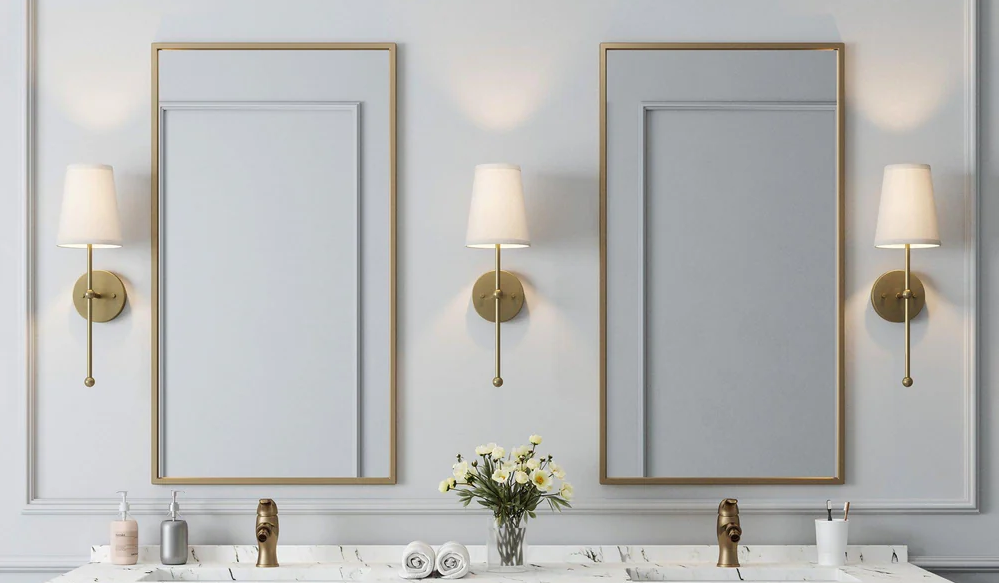
Accent Lighting: This is the mood maker. It includes wall sconces, buffet lamps on a sideboard, or picture lights over artwork.
Pro Tip: If you can only afford one upgrade, install a dimmer switch. It is the single most effective tool for changing the atmosphere from "home office workspace" to "romantic dinner." Ensure your dimmer is compatible with LED drivers to avoid that annoying buzz or flicker.

Deep Dive: Lighting Fixture Choices
The market is flooded with options. Here is a breakdown of the primary categories we sell, including who they are best for and why.
1. The Chandelier
The classic choice. Historically, a chandelier is defined by having multiple arms and light sources.
-
Best For: Traditional dining rooms, round tables, and making a statement.
-
Modern Twist: We are seeing a shift away from heavy crystal toward "Modern Organic" chandeliers—think tree branches cast in brass or glass bubbles.
-
The Linear Chandelier: This has become a bestseller in the US. It is essentially a long, rectangular chandelier. It is the absolute best choice for long rectangular tables (seats 8+) because it distributes light evenly from the head of the table to the foot.

2. Pendants (and Multi-Pendants)
Pendants are generally single-bulb fixtures suspended by a cord or rod.
-
Best For: Smaller tables or creating a custom "cluster."
-
The Trend: Instead of one big chandelier, designers are hanging two or three large pendants in a row over a rectangular table. This creates a very architectural, rhythmic look often seen in high-end shelter magazines like Architectural Digest.

3. The Flush Mount (and Semi-Flush)
-
Best For: Low ceilings (under 8 feet) or small breakfast nooks.
-
Retailer Insight: We generally advise against flush mounts for a formal dining room if you can avoid it. They don't provide the same focal point as a hanging fixture. However, a "Semi-Flush" (which drops down 4-8 inches) can be a great compromise for 8-foot ceilings, giving you the look of a chandelier without the height clearance issues.

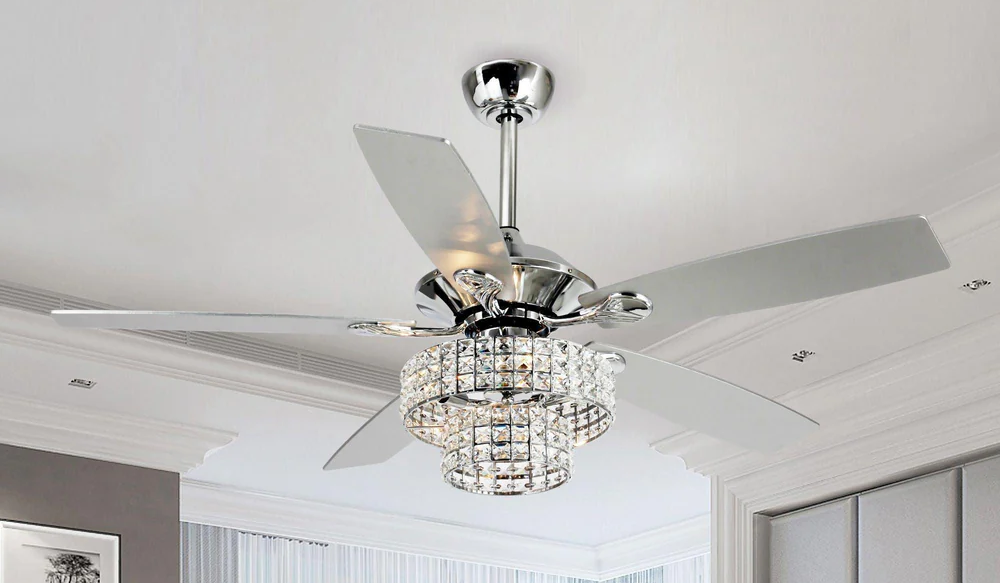
4. The Fandelier (Fan + Chandelier)
Ten years ago, these were considered tacky. In 2024 and moving into 2025, they are sophisticated and highly requested, especially here in the South and West where air circulation is mandatory.
-
What is it? A light fixture with retractable or hidden fan blades. When the fan is off, it looks like a nice pendant. When on, it cools the room.
-
Best For: Multi-purpose rooms, hot climates, and open-concept spaces where the dining area needs airflow.

| Fixture Type | Best Table Shape | Ceiling Height Requirement | Vibe Score (1-10) |
| Round Chandelier | Round or Square | 8.5' + | 10 (Formal) |
| Linear Chandelier | Rectangular or Oval | 8.5' + | 9 (Modern) |
| Pendant Cluster | Rectangular | 9' + | 8 (Artistic) |
| Semi-Flush | Any | 8' | 6 (Practical) |
| Fandelier | Any | 8.5' + | 7 (Functional) |
Which Light Quality Is Best for Dining?
You have picked the fixture, but if the light quality is poor, your expensive steak will look gray and unappetizing. This is where the technical specs matter.
Color Temperature (Kelvin)
The "warmth" of light is measured in Kelvins (K).
-
2700K (Warm White): This is the color of incandescent bulbs. It is cozy, inviting, and flattering to skin tones. This is the gold standard for dining rooms.
-
3000K (Soft White): Slightly crisper and brighter. Good if you use your dining table for homework or crafts, but we recommend using a dimmer to soften it for meals.
-
4000K+ (Cool White): Avoid this in the dining room. It looks like a hospital or a cafeteria. It makes food look clinical.
Color Rendering Index (CRI)
This is a spec many consumers miss. CRI measures how accurately a light source reveals colors compared to natural sunlight (which is 100).
-
The Retailer Standard: diverse Look for LEDs with a CRI of 90 or higher.
-
Why it matters: High CRI makes reds (tomato sauce, wine, meat) look vibrant. Low CRI makes them look muddy. If you have ever wondered why your food looks better in a restaurant than at home, high CRI lighting is usually the answer.
How to Choose the Right Size (The Math)
We touched on the "Rules of Thumb," but let's get specific on sizing because this is the #1 reason for returns in our store.
Sizing by Room Dimensions
If the room is empty and you don't have a table yet, add the length and width of the room in feet. Convert that sum to inches.
-
Example: A 12' x 14' room.
-
12 + 14 = 26.
-
Target Diameter: A fixture approximately 26 inches wide.
Sizing by Table Size (The Better Method)
Since the light relates more to the table than the walls, we prefer this method.
-
The 3/4 Rule: The fixture should be roughly 1/2 to 3/4 the width of the table.
-
Example: Your table is 48 inches wide.
-
48 x 0.5 = 24 inches.
-
48 x 0.75 = 36 inches.
-
Target Width: Between 24 and 36 inches.
Visual Weight
This is the "art" part of the equation. A fixture made of solid brass or black metal has high "visual weight"—it looks heavy. A fixture made of clear glass bubbles has low visual weight.
-
Tip: You can go slightly larger with glass fixtures because they don't block the line of sight. You should go slightly smaller with heavy, solid fixtures to avoid overwhelming the space.

2025 Trends: What’s Next in Dining Lighting?
As we look toward 2025, the trends in American dining rooms are shifting from the stark "Modern Farmhouse" look toward something warmer, more textured, and technologically advanced.
1. The "Soft Modern" Aesthetic
Sharp angles are out; curves are in. We are seeing a massive demand for fixtures with rounded edges, imperfect organic shapes, and soft diffusers.
-
Materials: Alabaster is making a huge comeback. Unlike the stark white of frosted glass, alabaster has veins and warmth that feels luxurious and earthy.

2. Mixed Metals
Gone are the days of matching your faucet to your light fixture perfectly.
-
The Look: Matte Black mixed with Aged Brass. The black grounds the design, while the brass adds a touch of glamour. It is a versatile look that fits almost any décor style.

3. Biophilic Design
Bringing the outdoors in. We are selling fixtures wrapped in natural rattan, woven seagrass, and even wood-beaded chandeliers. These add texture to a room that often has a lot of hard surfaces (wood table, glass windows).

4. Smart Technology Integration
Lighting is finally getting smarter in a user-friendly way.
-
Tunable White: We are seeing fixtures that allow you to change the color temperature via an app. You can set it to 4000K for working from home at 2 PM, and automatically shift it to a candle-like 2200K for dinner at 7 PM.
-
Matter Support: New fixtures are being built to work seamlessly with Apple HomeKit, Amazon Alexa, and Google Home without complex hubs.
FAQ
Q1: My junction box isn't centered over my table. What do I do?
A: This is a classic problem. You have two options. The "messy" way is to hire an electrician to move the box and patch the drywall. The "stylist" way is to buy a fixture with a long chain or cord and swag it. Install a heavy-duty hook in the ceiling exactly where you want the light, and drape the chain over to it. It adds a relaxed, casual vibe that is very popular in interior design right now.
Q2: Can I use LED bulbs in a vintage chandelier?
A: Yes, but be careful. Vintage fixtures often don't have the dimming capability for modern LEDs. You might need to change your wall switch to an ELV (Electronic Low Voltage) dimmer. Also, look for "filament style" LEDs so you don't lose the vintage aesthetic.
Q3: How do I clean a crystal chandelier?
A: Do not spray cleaner directly onto the fixture! The liquid can seep into the sockets and cause a short. Spray a microfiber cloth with a solution of 1 part vinegar to 3 parts distilled water, and wipe each crystal individually. It’s tedious, but it’s the only safe way.
Q4: Are drum light shades still in style?
A: The standard beige drum shade is fading out. However, "structural" shades—made of metal mesh, linen with bold contrasting trim, or perforated brass—are very much in. They are great for reducing glare.
Q5: Should the light fixture match the dining room hardware?
A: It should coordinate, not match. If you have black door handles, a brass light looks stunning. If you have chrome hardware, try a matte black fixture. Avoid mixing two similar but different metals (like brushed nickel and polished chrome); it looks like a mistake. Aim for contrast.
Final Thoughts
Lighting your dining room is about creating a container for memories. Whether you are serving takeout on a Tuesday or a three-course meal on a holiday, the light overhead sets the stage.
Don't rush the decision. Measure your table, check your ceiling height, and think about how you actually use the room. And remember, in 2025, the trend is comfort and warmth. Move away from the clinical and embrace the glow.
If you are unsure, start by snapping a photo of your dining space and bringing it to a local showroom. Seeing the scale and finish in person is always worth the trip.